In a previous blog post, we opened up the wonderful world of nonfiction books for kids. Nonfiction is important because kids love it, it provides facts and it's plentiful.
Once you've selected some nonfiction books (using the tips and sample series provided in the previous post) you may want to think about how to read nonfiction aloud. It's different experience than reading a fictional picture book or a novel. With a little preparation, you can include nonfiction in your Read-Alouds with ease.
To share nonfiction with kids, think out loud to explain how nonfiction works.
With very young children, that could be as simple as pointing to a picture of a mother animal and its baby and then pointing to their names in the text as you say them. It's also a good idea to explain to young listeners that fiction books are made-up stories, but nonfiction books contain true information.
 |
Mother and baby animal names "Deer and Fawn" and
"Koala bear and Joey" are in the top margin of this book,
I Love My Mommy Because... by Laurel Porter-Gaylord |
With an older listener, say 7 years old or older, you could explain what a table of contents is (if the book you are reading has one) as you open the book. Demonstrate how to use it. Also explain features like the index or glossary.
Page through the book, pointing out graphs and sidebars. Explain that sometimes they contain important information not found in the text. Demonstrate how to use them.
Finally, explain concepts of comparison, sequence or providing examples. Show how sometimes the words the author chooses can signal that she is making a comparison, setting up a sequence or providing examples. Point that out when you see it in the text.
 |
The Rosetta Stone, with text of the same
decree in three languages. provided the key
to understanding Ancient Egyptian hieroglyphs. |
By modeling how to read a nonfiction book, you are giving kids the Rosetta Stone--the secret to unlocking the knowledge they seek. Kids don’t know how to do this, but you can show them how if you point out design features, describe how you are looking at graphics, or model using tools like an appendix to find information.
Ways help kids read nonfiction
By slowing down when you read nonfiction aloud, and spending time on the elements described above, you not only help kids understand what you are reading about, but also help them build their own skills to successfully navigate nonfiction text.
Before you share a nonfiction book with kids, see if you can find examples of some of the things listed below.
Vocabulary
and Comprehension
|
Graphics
and Illustrations
|
Design
Features (table of contents, index, appendices etc.)
|
Teach
new words in advance
and
define
words while reading
|
Use visual thinking: Ask
What do you see in this graphic?
What makes you see that? What else does it show?
|
Use title and table of contents to
get kids thinking about the topic and what they already know about it
|
Point
out and define
Signal
and Academic words
(compare
contrast, sequence
or
examples of a concept)
|
Does this graphic give examples of
what the words say or does it provide extra information?
|
Point out chapter titles,
headings, subheadings and definitions
|
Find
the main idea and point it out, then find supporting
ideas
and point them out
|
Where can I find the answer to my
question? In the words? In the graphics? In my own head? By combining any of
these?
|
Point out sidebars, insets and
captions and explore the information they contain.
|
Ask
questions to see if kids understand
what
you are reading
along
the way
|
Question the picture: Does it make
sense? Is it accurate? Does it support the words?
Could you make a better picture?
|
Search for answers to kids
questions using the index and appendices
|
In addition to these elements, the format of the book will affect how you read it aloud. Some children's nonfiction reads like fiction, so you can read it straight through, like Groundhog Day! Other books are better suited to jumping around to answer kids' questions, reading bits and pieces here and there. Be sure to read through books first to get an idea of the best way share them with kids.
 |
| reads like fiction |
 |
| reads like a reference book |
VS.
One way to ease into reading nonfiction with kids is to pair it with fiction books on the same topic. Here are two of our favorite books about ice cream.

Joe runs a soft-serve stand in the summer, but no one knows where he goes in the winter. Rhyming text and double-page illustrations describe where people imagine him to be.
In which Elephant struggles with the dilemma: Should he share his ice cream with Piggie? The longer he dithers, the more his ice cream melts. What to do?
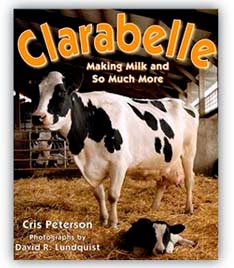
 For most kids, ice cream comes from the store. By providing books about cows, milk, dairy farming and how ice cream is made, kids can learn about the different parts of the process.
Kids are bound to get excited about all the things they can learn through a nonfiction book once they know how the books work. Whether you choose to do an all nonfiction Read-Aloud or just to include more nonfiction books related to your theme, be ready to follow the kids' lead, hunt for answers to their questions and provide more books for them to explore.