TRC Read to Kids

Welcome to The Reading Connection’s blog, where you’ll find the best guidance on reading aloud to kids. Whether you are a TRC Read-Aloud volunteer, parent or student, the book themes and crafts ideas, child development guidelines and recommended websites will expand your world. For 25 years, The Reading Connection has worked to improve the lives of at-risk kids by linking the magic of reading to fun experiences that inspire a passion for learning. Visit our website at www.thereadingconnection.org.
Showing posts with label illustration. Show all posts

Monday, July 27, 2015

Dust Bunnies with Jan Thomas: When less is more!


Dust bunnies. Who knew they were so funny?
Jan Thomas did and let us in on their secret.  You’ll never look at cleaning under the couch the same way again.


Thomas writes picture books with bright, bold illustrations, lovable characters, humor, suspense, action and irony. She writes short, punchy text that sometimes rhymes and repeats, often with a surprising twist at the end.


The combination of bold illustration, spry text and witty story lines makes her picture books excellent read-alouds. Thomas adeptly builds suspense and drama through her characters' facial expressions and crisp dialog. And like Mo Willems' work, although her books look very simple and can be read to very young listeners, their wit and irony engage older listeners, too.


What Will Fat Cat Sit On?
The answer to that burning question drives this story. Full of suspense, emotion and animal sounds, this picture book will keep listeners predicting and laughing right up to its surprise ending.


A Birthday for Cow
Some of the same characters from Fat Cat make a cake to surprise Cow for his birthday. Duck keeps trying to add a turnip to the recipe, but Pig and Cow stop him. Does Cow really want cake for his birthday? Explore irony and birthday tradition with this winning picture book.


Can You Make a Scary Face?
This interactive book asks the reader to follow directions. Young kids will love wiggling, dancing and making faces. Pair it with Don't Let the Pigeon Drive the Bus by Mo Willems, The Monster at the End of the Book by Grover (and Jon Stone) or The Book With No Pictures by B.J. Novak for more interactive fun.


Is Everyone Ready for Fun?
Keep the kids moving after reading Can You Make a Scary Face? with this action-packed picture book, where the goats and Chicken disagree on what is fun. Encourage the kids to predict what the goats will do and how Chicken will respond, while acting out the story as you read it.


Pair Thomas' books with Mo Willems’ Pigeon or Elephant and Piggy books and Doreen Cronin’s books for a wry take on animal antics. Or, on their own, Thomas' books could be used to introduce the concept of irony to an older group of kids.


Don't be fooled by the simplicity of Thomas' illustrations or text. She has plenty of surprises tucked in her picture books. Reoccurring characters allow for inside jokes and allusions to other stories that older readers will enjoy. Even younger kids will love finding "Easter eggs" Thomas includes for her readers.

Rhyming dust bunnies? Elegance and silliness in the same book? Through her picture books, Jan Thomas proves that less is more.

To receive credit for this online training, please fill out the form here.

Monday, March 9, 2015

Unlocking the Rosetta Stone: How to Share Nonfiction with Kids


In a previous blog post, we opened up the wonderful world of nonfiction books for kids. Nonfiction is important because kids love it, it provides facts and it's plentiful.

Once you've selected some nonfiction books (using the tips and sample series provided in the previous post) you may want to think about how to read nonfiction aloud. It's different experience than reading a fictional picture book or a novel. With a little preparation, you can include nonfiction in your Read-Alouds with ease.


To share nonfiction with kids, think out loud to explain how nonfiction works.


With very young children, that could be as simple as pointing to a picture of a mother animal and its baby and then pointing to their names in the text as you say them. It's also a good idea to explain to young listeners that fiction books are made-up stories, but nonfiction books contain true information.

Mother and baby animal names "Deer and Fawn" and
"Koala bear and Joey" are in the top margin of this book,
I Love My Mommy Because... by Laurel Porter-Gaylord


With an older listener, say 7 years old or older, you could explain what a table of contents is (if the book you are reading has one) as you open the book. Demonstrate how to use it. Also explain features like the index or glossary.

Page through the book, pointing out graphs and sidebars. Explain that sometimes they contain important information not found in the text. Demonstrate how to use them.

Finally, explain concepts of comparison, sequence or providing examples. Show how sometimes the words the author chooses can signal that she is making a comparison, setting up a sequence or providing examples. Point that out when you see it in the text.

The Rosetta Stone, with text of the same
decree in three languages. provided the key
to understanding Ancient Egyptian  hieroglyphs.
By modeling how to read a nonfiction book, you are giving kids the Rosetta Stone--the secret to unlocking the knowledge they seek. Kids don’t know how to do this, but you can show them how if you point out design features, describe how you are looking at graphics, or model using tools like an appendix to find information. 


Ways help kids read nonfiction
By slowing down when you read nonfiction aloud, and spending time on the elements described above, you not only help kids understand what you are reading about, but also help them build their own skills to successfully navigate nonfiction text.


Before you share a nonfiction book with kids, see if you can find examples of some of the things listed below.

  
Vocabulary and Comprehension
Graphics and Illustrations
Design Features (table of contents, index, appendices etc.)

Teach new words in advance
and
define words while reading

Use visual thinking: Ask
What do you see in this graphic? What makes you see that? What else does it show?

Use title and table of contents to get kids thinking about the topic and what they already know about it
Point out and define
Signal and Academic words
(compare contrast, sequence
or examples of a concept)

Does this graphic give examples of what the words say or does it provide extra information?

Point out chapter titles, headings, subheadings and definitions

Find the main idea and point it out, then find supporting
ideas and point them out

Where can I find the answer to my question? In the words? In the graphics? In my own head? By combining any of these?

Point out sidebars, insets and captions and explore the information they contain.

Ask questions to see if kids understand
what you are reading
along the way

Question the picture: Does it make sense? Is it accurate? Does it support the words?
Could you make a better picture?

Search for answers to kids questions using the index and appendices


In addition to these elements, the format of the book will affect how you read it aloud. Some children's nonfiction reads like fiction, so you can read it straight through, like Groundhog Day! Other books are better suited to jumping around to answer kids' questions, reading bits and pieces here and there. Be sure to read through books first to get an idea of the best way share them with kids.


reads like fiction
reads like a reference book


             VS.


One way to ease into reading nonfiction with kids is to pair it with fiction books on the same topic. Here are two of our favorite books about ice cream.  


Joe runs a soft-serve stand in the summer, but no one knows where he goes in the winter. Rhyming text and double-page illustrations describe where people imagine him to be.


In which Elephant struggles with the dilemma:  Should he share his ice cream with Piggie?  The longer he dithers, the more his ice cream melts.  What to do?


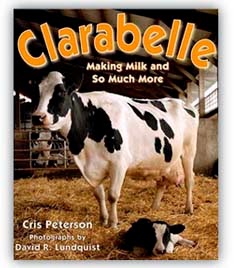
For most kids, ice cream comes from the store.  By providing books about cows, milk, dairy farming and how ice cream is made, kids can learn about the different parts of the process.


Another way to get kids into nonfiction is to create a treasure hunt. Choose a variety of books on a single topic, from a series or by the same author.  Read through them to find a question or two that each can answer. Be sure the difficulty of each question is appropriate for the age of the children you are reading with. Write the questions on index cards, with the title of the book.  

What animal weighs the same as
a ping pong ball?
How long are the tentacles of
the sun jellyfish?
What is the strongest animal for
its size?

Which animals have dangerous kicks?
Which animal kills more people in Africa
than any other?
How many animals called
"Goliath" or "Pygmy" are
in this book?  What do the words
Goliath and pygmy mean?

In addition to specific questions for kids to find in the books, generate some general questions too:
  • Which dangerous animal is your favorite and why?
  • If you could be one of the animals in the book, which one would you like to be?
  • Have you ever seen any of these animals?
When the kids choose a book they want to explore, work with them to find the answers to the questions. The questions you bring with the books are just a tool to get the kids exploring. If they start generating their own questions, follow their lead and look for those answers instead. 

Keep track of the answers to questions, so you can share them with the group at your Read-Aloud. Most kids like providing cool facts to their peers.
 
Kids are bound to get excited about all the things they can learn through a nonfiction book once they know how the books work. Whether you choose to do an all nonfiction Read-Aloud or just to include more nonfiction books related to your theme, be ready to follow the kids' lead, hunt for answers to their questions and provide more books for them to explore.


To receive credit for this online training, please fill out the form here.

Monday, August 4, 2014

Hello Ocean


Hello Ocean, by Pam Muñoz Ryan, translated by Yanitzia Canetti and illustrated by Mark Astrell, is one of TRC's favorites for reading aloud. The lyric language, rhyming text and rich description of a child's day at the beach engage readers and listeners of all ages. The book's lush and vibrant acrylic illustrations capture the sun, wind and water's movement and strength.

As an ode to a summer day, it is delightful, but as an exploration of the five senses, it is masterful. Ryan moves carefully through each of the senses as the young beach-goer describes her experience.  

Each of the senses is treated to several pages of evocative text and beautiful illustrations, and a concluding section repeats each of the senses, anticipating a return trip to the beach in the future.


The author emphasizes words relating to each sense by using bold font, and includes different forms of the verb for each (see/looks, hear/sounds, touch/feels, smell/smells, taste/tastes), ensuring that kids notice the sense being showcased. You might think that with this framework the language would sound stilted, but it doesn't.  The story and rhyme flow beautifully. 

This aspect of the story, along with rhyme and repetitive structure, helps the reader engage the listeners and builds anticipation about what the girl will experience next. Available in a Spanish/English bilingual format, the book makes this beach trip widely accessible.

When you read Hello Ocean aloud, encourage kids to point to their eyes, ears, hands, noses and mouths as the story works its way through the senses. Ask the kids to brainstorm more words describing the wind, sun, sand, salt water and all things beachy.


Many kids TRC serves may have never been to the beach. You can provide an actual sensory experience by bringing sand and shells to look at and touch (TRC has some in the office for your use), salt water and seaweed for the kids to taste, sunscreen to smell and audio recordings of ocean sound for kids to listen to. Round out the experience with towels and beach balls to play with, or set up a deep sea fishing expedition like this one at a Read-Aloud. 

Whether you are reading books about beaches and oceans, summer adventure or the five senses, Hello Ocean will be a hit with the kids.


To receive credit for this online training, please fill out the form here.

Tuesday, May 27, 2014

This book is just right...


There's an art and a bit of a science to choosing a good Read-Aloud book. The Reading Connection (TRC) has spent more than 20 years reading with kids, and we've identified some essential elements of a quality book for reading aloud.

The next time you are choosing books to read with kids, look for these elements:


Fun or interesting topic
Will the topic appeal to kids? What you think is fun might be different from what your listeners think is fun.

Is the topic appropriate? Be sure to read, or at a minimum, carefully look through any book you choose before you read it to kids. Look for content or story twists that would be inappropriate or that you would feel uncomfortable discussing with a child. For example, a book about pirates might include a section on drug smuggling or human trafficking. Really.

High-quality writing and a good story
Less is more. The amount of the text of the page should be appropriate for
the age of the listener. Generally speaking, the younger the child, the less text the page should have.

Rhyme and repetition can be fun and keep the listeners engaged.

If the book is fiction, is the story interesting? Can kids relate to it?

If the book is nonfiction, is it accurate? Is it concise or wordy?


High-quality illustration
Are the illustrations appealing? If you are reading to a large group, are theillustrations easily visible from a distance?

Do the text and pictures work together to tell the story?  Do they enhance each other or detract from one another?


Simple isn’t always bad.  Elaborate isn’t always good. If you've ever read one of Mo Willem's Pigeon books with a kid, you've seen how this simple fellow packs a lot of moxie.


Design and writing that encourages interaction
  • Page breaks or writing that support prediction or create suspense
  • Rhythmic writing or energetic pacing that move the story along
  • Physical design that demands active reading (questions, flaps, instructions)
  • Writing or illustrations that encourage movement or verbal interaction


Lack of Preachiness
Kids are smart. You don’t have to beat them over the head with a moral. If the story is well written, it conveys a message on its own.


Diversity
The world is full of all kinds of people -- people with different shapes, sizes, colors, beliefs, abilities and lifestyles. Look for books that have diverse characters and settings. Books should be both windows to the whole, wide, diverse world and mirrors where kids can see themselves and their families reflected. (This is such an important topic that we'll devote an entire blog post to it.)


The “special sauce” --  that something special that makes you smile or nod
Beyond interesting topics and high-quality writing, illustration and design, really great books have something extra -- something that catches your attention or your heart.  It makes you want to read the book again and share it with someone else. You'll know it when you see it, but here are a few examples:

  • Characters you relate to
  • Humor
  • Twists or unexpected elements
  • Universal truths or experiences


When you are looking for the right book, libraries and bookstores can feel overwhelming. Don't hesitate to ask booksellers and librarians for help in finding books kids love. Jim Trelease's Read Aloud Handbook and Valerie & Walter's Best Books for Children by Valerie V. Lewis and Walter M. Mayes are excellent references.

Once you have separated the wheat from the chaff, book-wise, then you can start assessing which books would be good for various audiences, age groups and situations. Stay tuned for another blog post describing that process. In the meantime, happy hunting!

To receive credit for this online training, please fill out the form here.

Monday, January 20, 2014

Author Profile: Don and Audrey Wood

Husband-and-wife team Don and Audrey Wood have created many picture books together, individually and with their son, Bruce. Their lush illustrations, rollicking rhymes and rhythmic pacing and repetition make many of their works perfect for reading aloud.


Their website has lots of interesting information and useful resources. You’ll find biographies of them, activities and videos for their books, as well as a “secrets” tab that provides intriguing backstory for some of their books.


Here are some of our favorites for young children

The Napping House
Probably the Woods' most famous book, this cumulative tale pairs repetition with detailed illustrations to describe a quiet house “where everyone is sleeping.” That is, of course, until they are not. Little kids will want to chime in and list the nappers, as well as search the illustrations for the tiny flea hiding in nearly every picture.


Wacky illustrations, repetition (Piggies) and rhyme (Silly Sally) invite kids to participate by wiggling their fingers, acting out the story, finishing predictable lines and words or predicting what will come next.


Little kids will love this silly spin on bath time. When the king stays in the bathtub all day, the court doesn’t know what to do. A perfect book for making connections to a small child’s daily experiences (bath time, learning about time) talking about the time of day (morning, noon, afternoon, evening, night), King Bidgood also provides an excellent example of a kid solving a problem when adults fail.


Books that work with young and older kids

Simple text and big pictures make this a quick and fun read-aloud for the pre-K set. Older kids can explore the emotions of the mouse, the motives of the narrator and the existence of a bear.


Quick as a Cricket
Little ones will love acting out the phrases in this book. With older kids, explore the many facets of one’s personality or introduce the concept of similes.


This nearly wordless book encourages readers to notice the changing moods and drama of our sky. Younger listener will like the progression from day to night. Older ones might like to imagine and draw their own skies.

For the more sophisticated listener

An original fairy tale based on a 16th century game involves seven kids, a mom, a witch and a riddle. Audrey was the model for the mom and Don was the model for the witch. 


Weird Parents
Kids, especially preteens, will relate to this story about a boy who wishes his parents weren’t so weird. It would be a great addition to a Read-Aloud about feelings, families or not fitting in.


This list only scratches the surface of the books the Woods have created. Check out your local library for more titles and experience the talent and versatility of this creative pair.

To receive credit for this online training, please fill out the form here.

Monday, July 1, 2013

Author Profile: Mo Willems

“Always think of your audience, never think for your audience.”

This week, we’re featuring an author who has been called a master of children’s literature: the brilliant, award-winning Mo Willems. Since receiving a Caldecott Medal Honor in 2004 for his now-classic picture book, Don’t Let the Pigeon Drive the Bus!, Willems has written and illustrated over 40 books for children. 


His books are deceptively simple, as if any parent could have made them, but there is more than meets the eye behind the illustrations that Willems uses. They express the story clearly and allow the reader to focus more closely on the text. Instead of imitating life, he uses his illustrations to help create joy and magic in his stories.
Although his books appear to be written for a very young reader, he has said that he doesn’t write for a certain age because he wants to have as large an audience as possible. His clever humor and the way he writes about emotions like jealousy, sadness and joy make it easy for readers of any age to connect to his books, and parents especially will be able to relate. The tactics that the sly Pigeon uses to try to convince the reader to let him drive the bus, stay up late or get a puppy are strikingly familiar to anyone who has tried to bargain with a child.
The work of Willems could easily become a theme for a Read-Aloud. While his most famous picture book characters are Pigeon and Knuffle Bunny, he also created an extensive series of early readers focused around the relationship between Elephant and Piggie. These books can spark discussions about different situations and can help children learn to be more empathetic. There are also a number of craft and activity ideas to go along with these books that could be used at a Read-Aloud. 

At a recent Read-Aloud, a WMATA bus driver read Don’t Let the Pigeon Drive the Bus! to the children. The Pigeon books lend themselves to interaction, as the Pigeon speaks directly to the reader and asks to drive the bus. He tries to persuade the reader by saying he'll be their best friend or even give them five dollars if they let him drive the bus. The kids love to shout out “NOOOO!” when asked if they would let the Pigeon drive the bus!

Regardless of age, any reader will enjoy the vast array books by Mo Willems.


This post was written by The Reading Connection's intern Margaret Fogarty.

To receive credit for this online training, please fill out the form here