TRC Read to Kids

Welcome to The Reading Connection’s blog, where you’ll find the best guidance on reading aloud to kids. Whether you are a TRC Read-Aloud volunteer, parent or student, the book themes and crafts ideas, child development guidelines and recommended websites will expand your world. For 25 years, The Reading Connection has worked to improve the lives of at-risk kids by linking the magic of reading to fun experiences that inspire a passion for learning. Visit our website at www.thereadingconnection.org.
Showing posts with label chapter book. Show all posts

Monday, April 11, 2016

Kids at heart: Celebrating Beverly Cleary at 100

"Where are the books about kids like us?"

That’s what the young patrons at the public library in Yakima, Washington asked fledgling librarian Beverly Bunn in 1939. Beverly, who had asked that question herself as a child, remembers longing for the same thing. Where are the funny stories about average boys and girls just knocking around the neighborhood? 

This question stuck with the young librarian, whom you might know as Beverly Cleary, the beloved creator of characters like Henry Huggins and Beezus and Ramona Quimby. 


Blog post author, Rachael Walker, with Ramona
Like the kids we were and many of the kids we know now, Cleary’s characters put their curiosity to work and exercise their imaginations — and then have to deal with the consequences. Often, her young characters’ good (or at least reasonable) intentions don’t turn out as expected and there are misunderstandings, especially when the adults involved see honest mistakes as silly, naughty or exasperating. 

Beverly Cleary’s books are great fun to read aloud. Each chapter can stand on its own as a funny story. These tales of everyday kids are sure to stimulate lots of laughter and knowing looks when shared with young readers.  

You’ll probably be laughing too, but what about those knowing looks? Do you see Ramona as lively and feisty or annoying and challenging? Do you have appreciation for the honesty of someone who takes one bite out of each and every apple because “the first bite tastes best"? Can you empathize with Ramona, who explains, "Because when I ask, you don't let me do things," when questioned as to why she didn’t ask if she could have a party?

Do you remember what it felt like to be smaller than everyone else?  Many grown ups really do forget what it's like to be a kid. Through Ramona, Beverly Cleary reminds us of how we wanted to be treated when we were kids.

Wanting to help.
Remember being anxious about your parents’ well-being and what you could do to get your father to be healthy and quit smoking? (Ramona and Her Father)

Wanting to learn.
Remember asking important questions, like how did Mike Mulligan use the bathroom when digging the basement of the town hall? (Ramona the Pest)

Wanting to have input. 
Remember when, as a littler person, you sometimes had to be a bit noisier and a bit more stubborn in order to be noticed? (Ramona the Pest)

Wanting to choose. 
Why shouldn’t you wear rabbit ears to the library and get to pick out your own book? (Beezus and Ramona)

Often the responsibilities of adulthood have us romanticizing our own childhoods and get us thinking that children's lives are generally idyllic and carefree. But kids in crisis are dealing with lots of problems — in addition to all the issues and worries involved in growing up. Be sure to have some appreciation for that and for kids being kids.

As Beverly Cleary turns 100 years old on April 12, make some time to read about Ramona’s antics. Enjoy her high energy and spirit! As you read and think about why someone would want to put jelly on her mashed potatoes, turn a worm into an engagement ring or bake a doll into a cake, remember: she’s just a kid.

Guest blog post by Belle of the Book, Rachael Walker.


To receive credit for this online training, please fill out the form here.

Monday, May 18, 2015

Breaking Rules: Better on Paper

While I was searching through Reading Road Maps on TRC’s Volunteer Central, looking for a theme, I came across Trouble Makers. It was perfect. My Read-Aloud team had been looking for a way to reinforce TRC’s Promises and reset expectations at the beginning of a new year.

I picked out a slew of great books, including one of my childhood favorites - Judy Blume's Tales of a Fourth Grade Nothing. Tales tells the story of 9-year-old Peter Hatcher, and more often than not, Peter’s mischievous younger brother – Fudge. Fudge is always causing trouble: destroying Peter’s homework, dumping food on the floor, cutting his own hair. All in all, Blume penned five books featuring Fudge and his antics (Tales of a Fourth Grade Nothing, Otherwise Known as Sheila the Great, Superfudge, Fudge-a-mania and Double Fudge).

Picking books was the easy part. When I began to plan an activity to reinforce the theme, I worried I had made the wrong decision. Columbia Grove readers are a large, enthusiastic, vocal bunch. An invitation to engage in troublemaking seemed like a recipe for disaster. Instead, I decided to have the kids write about Fudge doing something wild and crazy – rather than doing anything wild themselves. 

At the Read-Aloud, we used the TRC Promises (especially "RESPECT") as a way to introduce the theme and start a discussion about getting into trouble. In a large group, we read a chapter from Tales of a Fourth Grade Nothing where Fudge gets into all kinds of trouble. In small groups, we read other books about mischief from the Trouble Makers Reading Road Map as well as M is for Mischief: An A to Z of Naughty Children.

The kids were given a prompt and each wrote one sentence about something mischievous Fudge did on his first day of school. Their responses were wonderfully all over the place, with many (mostly those written by the boys) involving various bodily functions. We compiled their sentences, added a conclusion and bound the pages together into a "book": Fudge-a-Palooza.  

For kids who quickly finished writing their sentence, we had a word search waiting with synonyms for "trouble maker". And for a snack we served, appropriately, fudge.


The Columbia Grove Fudge story

That week, Columbia Grove readers had two things to sign. As always, they signed their new books to grow their identity as readers as well as their personal libraries. They also signed the title page of Fudge-a-Palooza and, hopefully, also began to identify as writers.


The kids showing off their Fudge book and their new books

Guest blog post written by TRC Read-Aloud volunteer, Erin MacKay.

To receive credit for this online training, please fill out the form here.

Monday, December 16, 2013

Holiday shopping

Are you still looking for the perfect gift for the kids and adults on your list? Lucky for you, The Reading Connection (TRC) is here to help.

Books are a great gift for kids of all ages. Build a love of reading from the very start by giving infants and toddlers board books that were made just for them. Board books can stand up to the heavy love that babies give them.  They are resistant to tears and being chewed on, since their pages are made of cardboard.

Picture books can appeal to young people from toddlers and teens, depending on their design and content. Take the time to read through a picture book that catches your eye. You might be surprised at the wit or depth contained therein. Don't hesitate to ask a bookseller to recommend her favorite titles for the children you have in mind. 

"Early readers" are designed to help beginning and newly independent readers feel confident reading on their own. You'll know these books by the distinctive 6-inch by 9-inch size. Reading books on favorite subjects is a strong motivator for new readers; it's well worth your time to seek out early readers on your young reader's current passion. 

Novels and nonfiction books for older kids come in all shapes and sizes. Find out what gets your recipient fired up and go from there.  Some kids will want the newest book in their favorite series, and these series are available for all ages (one current favorite is Diary of a Wimpy Kid: Hard Luck). Ask a booksellers advice about the best choices for the age and interests of the child for whom you're buying. 
For the readers on your list, check out the many lists of top books of the year. Some of our favorites from this year are

Middle grade: Wonder and One Crazy Summer
Young adult: Allegiant and The 5th Wave

You can also find year-end recommendations at Goodreads and Indie Bound or on our wish list.  When buying books, please support your local independent bookstores, who support TRC.

Consider honoring friends and family who love books by helping to provide free books and literacy-rich experiences for at-risk kids and families. A $10 donation to The Reading Connection can purchase and deliver a book to the home of one of our Book Club kids. 

Monday, March 4, 2013

What Kids Want to Read - A Publisher's Perspective

What do kids want to read? The Diary of a Wimpy Kid series by Jeff Kinney of course! Reading Connection kids have requested these books more than any other in the history of our Read-Aloud program. 

Amulet Books, an imprint of ABRAMS, often has the inside scoop about what kids want to read. Amulet was the first imprint to offer novels written entirely in instant messages (Lauren Myracle’s bestselling and often controversial TTYL series), and has been publishing modernized fairy tales long before TV got around to it (Michael Buckley’s bestselling The Sisters Grimm series). And if you haven’t heard of the mega-best-selling Diary of a Wimpy Kid series by Jeff Kinney, you’ve been living on Mars.


Jason Wells with Laura Mihalick
ABRAMS publicity and marketing
associate
Publicity and Marketing Director for Abrams Books for Young Readers/Amulet Books, and longtime friend to The Reading Connection, Jason Wells has promoted these smash hits as well as the bestselling Origami Yoda series by Tom Angleberger and long-running Babar series by Laurent de Brunhoff.  Jason talked with TRC recently about what kids like to read.


What did you like to read when you were a kid?
I read so much as a kid! My favorites were:  The Fire Brats series by by Barbara Siegel, Scott Siegel and Barbara Steiner.  It’s a post apocalyptic series featuring siblings who are trying survive in a radically changed America after World War III.

The Tim and Ginger books by Edward Artisane.  These are mild but fun adventures set in a seaside town—growing up near a shore, the lighthouses and references to low and high tides were easy to love. 

My great aunt gave me the We Were There series. They were brief books about historical events in the US.  Peppered with illustrations, the books were kind of early graphic novels.


You work the children’s book publishing and selling world.  What do kids want to read?
For kids who want to read, they will always find something. They don’t need me to tell them what to read. It’s the kids who don’t want to read that are the challenge. As recent trends suggest, kids clearly want to read novels with illustrations or fun activities that accompany them. From Abrams, the Origami Yoda books and Wimpy Kid books fit this fill nicely.

 
What do you think it is that has made some of your titles (like Wimpy Kid or Lauren Myracle’s books) such big hits?  Are there certain qualities in these books that are extraordinarily appealing to kids?
I think kids especially like books that their parents won’t want to read. Kinney’s Wimpy Kid books with cartoons and Myracle’s TTYL series written in instant messages offer kid-only appeal. As much as review attention and national media can help spread the word, once kids are hooked, the buzz that they create with their friends will help books find a wide audience to make them big hits.


What is your sleeper title at Abrams?  What is the one right now that will make it big once kids know about it? 
I think that would be Nathan Hales’ Hazardous Tales.  These books are modern day versions of the We Were There series I read as a kid.

What do you think will be Abram’s next big thing?
We have a new series coming out in 2014 by Jon Scieszka called Frank E. Stein. It should be pretty popular. 

How do you choose a book to give to a kid?
Ah the most important kids in my life are my two nephews. They are always clamoring to be in the know with Wimpy Kid developments, but I always bring them books they wouldn’t have found themselves. I try to choose books that will broaden their worlds, but that are fun. I don’t have a formula per se but I know it when I see it.


To receive credit for this online training, please fill out the form here.

Monday, July 9, 2012

Read-Alouds for the older crowd: how to keep tweens engaged

Occasionally you might find yourself at a Read-Aloud mainly populated by kids who aren't as interested in hearing picture books read out loud. The problem isn't that they're too old for Read-Alouds; many kids enjoy being read to until thirteen or fourteen (and we know some adults who like to be read to, as well!). The problem is the book!


By the time kids are old enough to read on their own, they might be able to read the text of a picture book in their heads faster than you can read it out loud to them. This can be frustrating and, frankly, boring for an older kid who's moving on to bigger and better reading materials, even if the pictures are interesting. 


Parents can solve this problem by reading ten or twenty minutes from a chapter book every day until the story is finished, but it's harder to do that in a Read-Aloud situation. In an article on booklistonline.com, author Rob Reid gives a suggestion for how to handle having an audience with minds that are hankering for longer, more complex material than picture books. 


Ried's suggestions are aimed towards young people who "want to learn about themselves and their own place in the world." If you capture their attention with a segment from a chapter book, it might inspire them to pick up the book themselves!


See Ried's article for his segment suggestions, including selections from Ben and the Suddenly Too-Big Family by Colby Rodowsky and The Evolution of Calpurnia Tate by Jacqueline Kelly.


Here are some suggestions by TRC for selections from chapter books that could be read to an older group (ages 8-11):


Harry Potter and the Sorcerer's Stone by J.K. Rowling

This is a book that requires very little introduction! After explaining the basic premise (keep it simple: Harry Potter and his friend Ron are at a school for wizards called Hogwarts) read from chapter ten, 'Halloween'.

Start towards the end of the chapter, with "On Halloween morning they woke to the delicious smell..." (in the American paperback addition this is near the bottom of page 170) and read to the end of the chapter. This segment is about ten pages long and works for a few reasons: it shows Hogwarts students in Charms class, really highlighting Rowling's Hogwarts universe; it shows Harry and Ron and Hermione fighting a mountain troll and then becoming friends; and it works well as a self-contained story in that it resolves -- though the audience will definitely be left wondering what happens! 


Rascal by Sterling North


In Sterling North's largely autobiographical children's novel, the eleven-year-old protagonist becomes unlikely friends with a baby raccoon. He spends a year raising his new pet, named Rascal, and the book details the adventures they have together.


There is a memorable chapter where Sterling and Rascal enter (and win!) a pie eating contest together, and this segment would make a great Read-Aloud. Begin towards the middle of the "September" section of the book, with the sentence, "The most exciting event in Brailsford Junction each September was the Irish Picnic and Horse Fair..." (around page 119, give or take given the edition) and read until the section ends with "it was a delicious victory." No kid will be able to resist the image of a raccoon helping out in a pie-eating contest!


Beezus and Ramona by Beverly Cleary
Kids might be familiar with this title; the book is old but it was recently adapted into a film starring none other than the famous Selena Gomez. The introduction for the story is that Beezus Quimby is having trouble with her little sister, Ramona--something many kids might be able to identify with! 

In this short selection, Beezus is having a hard time on her birthday. Start at the beginning of chapter six, page 131 in our edition (pictured), with the very first sentence: "When Beezus came home from school on the afternoon of her tenth birthday..." and read through to (on our page 144) Aunt Beatrice's line: "What's an aunt for if she can't come to the rescue with a birthday cake once in a while?" The section ends on a positive note after ten pages of birthday cake drama. And what kid (or adult!) doesn't feel horrified at the idea of a ruined birthday cake? Everyone will enjoy watching Ramona's cake-antics--especially since Beezus comes out on top in the end with a wonderful birthday.


 The Enormous Crocodile, Esio Trot and The Giraffe and the Pelly and Me, all by Roald Dahl.

These novels are short enough that you could conceivably read  the entirety of one in a Read-Aloud. They all feature pictures, too, so they're even shorter than they look.


If you read a segment of a book, round out the Read-Aloud by having a couple copies of the book in case kids want to hear some more of the story during small-group time, and have some picture books on similar topics in case the younger end of the age range want to look at those.


If you're a TRC volunteer and decide to try this out, let us know what book you're going to read segments of; we might be able to put some of the same title in the give-away book box for kids who are eager to continue the story! They might be big enough to read it on their own, or have a parent to read to them at home. And having a really good book that's a little too hard can be a great incentive to struggle through the difficulty.

Post by The Reading Connection intern Anna McCormally.


To receive credit for this online training, please fill out the form here.

Monday, June 11, 2012

Getting kids to think outside of the box

A recent conversation with TRC board member Jim Egenrieder got me thinking about how TRC includes books about science, technology, engineering and math (STEM) in our programs.  Jim is, among other things, a STEM education specialist for Arlington County Public Schools in Virginia. He helped me realize that I’d been too limited in the way I thought about the relationship between STEM education and books.

Exploring the states of matter
At TRC, we’re all about creating regular and passionate readers.  That means giving kids the books they want to read.  In many cases, that means nonfiction.  Kids love exploring the whys and hows of the world, and we’re happy to supply them with lots of nonfiction books at Read-Alouds, and in the mail through our Book Club.  We even provide explanations of how certain Book Club books build math and science skills in addition to reading skills in the tips we send out with packages.  We plan special Read-Alouds about math and science, sometimes with special guests, and feature exciting books all about these topics.

During my visit with Jim, he defined what STEM means and then we talked about ways books can foster that kind of learning. 

• Science is answering questions with observation and isolating variables.
• Technology is any purposeful modification of the natural world.
• Engineering is solving problems using a design process.  And,
• Math is the relationship between things real or imagined, based on logic and often quantified with numbers.


His explanation of the goals of STEM education made me realize that books not only can teach math and science vocabulary and concepts, they also do much more.

At the very core of STEM learning and proficiency are curiosity and imagination.  A sense of wonder and possibility lead to exploration.  Imagination and creativity are essential for problem solving.  And most relevant to our Read-Aloud, kids love stories about exploring mysterious things and solving problems.

When we share books with kids that spark their imaginations and encourage them to think creatively, we help create the future Marie Curies, Albert Einsteins, Charles Drews and Bill Gates of our world.  I’m talking about picture books like King Bidgood’s in the Bathtub or novels like Harry Potter, The Phantom Tollbooth, The Mysterious Benedict Society or The Calder Game.  All of these books feature kids solving problems in a creative way.


Or books like It Looked Like Spilt Milk and (the sadly out-of-print) Bored--Nothing to Do!, Press Here, Not a Box or books David Wiesner and Chris Van Allsburg.  These books challenge a child to look at the world with in a different way and to apply their own imagination to the stories. 


Here's a new TRC favorite: Not a Box!


Encouraging kids to use their imaginations and think creatively builds the skills our kids need.  The Boy Who Harnessed the Wind by William Kamkwamba and Bryan Mealer tells the story of just such a boy, who imagined a solution to his community’s drought and built a windmill out of parts he finds in a junkyard.  Yes, it fits Jim’s definition of engineering and maybe even technology, but at the heart of the story are William’s curiosity and creativity.

At TRC, we’ll continue to provide books about fact and fiction for the kids we serve, to build their passion for reading and their imaginations.  And here at the TRC Training Hub, we’ll also include posts every few months exploring the relationship between STEM education and reading.  In the meantime, read a book that gets you to think outside the box!


To receive credit for this online training, please fill out the form here.

Monday, April 9, 2012

Parts of a Book: The Importance of Book Mechanics

While Read-Alouds are about getting kids excited for the stories inside books and giving them information on all their favorite subjects, there's another part that we talk about less frequently: helping kids learn about books in general.

Children who grow up in families where books aren't an integral part of daily life may not be as familiar with the parts of a book as kids who use books every day. Helping kids at Read-Alouds get comfortable with the way books are organized is just as important as inspiring them to read on their own or teaching them how to sound out words. It's part of the mechanics of reading. 

In Read-Alouds, take time to emphasize the parts of a book.


How to hold a book
If you're not too familiar with books, you might not know how to hold one--it's important to be gentle and not pull too hard on the pages or bend the spine. This you can show by example, and when kids are picking out books to take home, gently correct a child who is being too rough with it. Hold the book, smooth the cover, and say, "This looks like a great book! What a beautiful cover. Remember to treat it nicely." Observers will learn from your example.

The cover and title page
When you first bring out a story, take a minute to show the cover to the audience. Ask what they can guess about the story from the front of the book. Who will the characters be? What does the title tell us? Point out where the author's name is and read it out loud. Despite the old saying about not judging a book by its cover, learning to discern what a book is about from its cover is an important skill.

What can we take from the cover of Yertle the Turtle and Other Stories? Well, we know it's by Dr. Seuss. Ask your audience what they know from experience about Dr. Seuss books. (There will probably be silly words and rhymes.) Point out the picture of the turtles all stacked up--take a minute to talk about what that is all about!

Turn to the title page--note how the title and author's names are printed again. This is true of every book!


Table of contents and chapter list
When you have a reader who is just moving up to longer books--or if you're going to read part of one to a group--take a minute to show off the table of contents or the chapter list. Some nonfiction books will have a table of contents that shows where different sections begin and end. Show the kids how to find which part you want to read, and the corresponding page number. 

Explain how not every book has to be read from the first page to the last page--the table of contents lets you skip around to what you want to read. If it's a nonfiction book and you're working one-on-one with a child, let him look through the table of contents and pick which section he wants you to read. 


Index
The first page of Shel Silverstein's Everything On It index.
Like the table of contents, knowing how to use an index is an important reading skill. Fast-forward a few years and the kids you're reading to will be asked to do a research project in school. The point of using an index is to give the kids practice finding relevant information inside books. You can give your readers a head start by helping them understand the concept of an index. It sounds like such a little thing, but the difference between knowing what an index is and how it's used and not knowing will make a big difference!

Note to your readers that the index is located at the end of the book, whereas the table of contents is at the front, and that the index works alphabetically (talk for a minute about what that means) while the table of contents lists things in the order they appear in the book.

Understanding how a book works is just as important as knowing how to read one. Don't devote an entire Read-Aloud to talking about how indexes work or what information is available on the title page--that's what school is for, and Read-Alouds are primarily about having fun with reading. But, you can integrate this kind of important information about book mechanics into every Read-Aloud you do. Even though it may not seem like it, doing so can help give readers a big advantage when it's time to use books in the rest of their lives. 

Post by The Reading Connection intern Anna McCormally.


To receive credit for this online training, please fill out the form here.

Monday, April 2, 2012

Give-Away Book Cheat Sheet

Sometimes the kids at a Read-Aloud need your help to pick a great book to take home with them. If you're not regularly immersed in the world of kids' reading materials, you may need some help knowing how to help kids find books they'll like. Here's a primer to get you started.

Early Readers
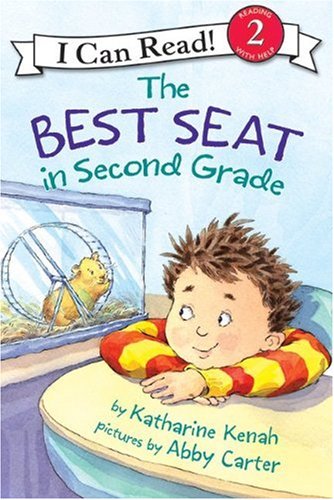
These books are geared for kids who are getting their feet under them in reading on their own. Early readers are leveled, where level one is made up of very simple sentences and level four is basically a very short chapter book. They are almost always the same size, a tad larger than a normal novel, but very thin. Many titles are nonfiction or based on popular movies, such as Star Wars and Cars.

Graphic Novels 
Graphic novels are a great choice for "reluctant readers" who are intimidated by lots of words on a page. Graphic novels tell a story in comic book style. Among the graphic novel series that kids love these days are Babymouse (kids often consider it a series for girls), Lunch Lady (see below), Squish and Bone (more advanced).

Illustrated Chapter Books
  • Geronimo (and Thea) Stilton books combine text, cartoon-like drawings and words in playful type.
  • Diary of a Wimpy Kid books are written to look like a diary and they mix in stick-figure drawings along with the text. There are now lots of spin-offs that have text written in a similar manner.
  • Books in the Captain Underpants series are a mix of graphic novel and fiction writing and are fast-paced and silly.

Popular Chapter Book Series
  • Judy Moody & Stink: Judy is a fun-loving and energetic third-grader. She and her brother, Stink, have all sorts of adventures. 
  • Junie B. Jones: She has a tendency to get into sticky situations in both kindergarten and first grade.
  • Magic Tree House: Jack and Annie travel through time on their adventures, landing in a different time period in each story.
  • Goosebumps: Scary stories, popular with 9- to 11-year-olds.
  • American Girl: Girls who lived in various times throughout American history share their stories.

When helping a child pick a book, some key tips include the following:

  • Browse the selection before the children start picking books so you know what is available. 
  • Put out a variety of titles from each book type, displaying the covers. The aim is to give the kids choices, but not to overwhelm them.
  • If a child isn't finding anything she wants to read, ask what kind of topics she likes (sports, animals, fairies, science, fantasy, etc.) and use that as your guide.
  • Use the book cover as your guide about subject matter.
  • Read the description on the back of the book.
  • Flip through the book to gauge text size and line spacing.
  • Listen to what the kids get excited about so you'll know what's popular.
  • Write down titles they're searching for and contact the TRC office to see if those books can be obtained.

If a child gets excited about a book, let him have it, no matter the difficulty level. Even if it's at a more advanced level than you assume they can currently read, they'll get to it eventually. Kids might also feel a special attachment to a book or series they read at a younger stage in their lives.

If you're excited about the book options, the kids will follow your lead. Remember that if a child asks for a specific book, write down the book title and the child's name and contact the TRC office to see if we have it or can get it. For more tips on helping kids pick books check out this blog post from last year.


To receive credit for this online training, please fill out the form here.