TRC Read to Kids

Welcome to The Reading Connection’s blog, where you’ll find the best guidance on reading aloud to kids. Whether you are a TRC Read-Aloud volunteer, parent or student, the book themes and crafts ideas, child development guidelines and recommended websites will expand your world. For 25 years, The Reading Connection has worked to improve the lives of at-risk kids by linking the magic of reading to fun experiences that inspire a passion for learning. Visit our website at www.thereadingconnection.org.

Monday, April 20, 2015

Moved By Books

For years, I tried to follow parenting advice that suggested setting up a homework area. Nearly everything I read advised creating a comfortable, well-lit and well-supplied desk or table and chair. So we set up several spots around the house that could work well. But every day I’d instead find my two boys sprawled on the floor with their books and homework.


I objected at first and my insistence on working at the desk resulted in many homework battles. Then I finally realized they’ve been sitting at a desk all day! Of course they want to stretch out and be in control of how to position their bodies for a change. Homework gets done around here much more smoothly now. You just have to watch where you step.

Not sitting is good for you. Educators and scientists have noted the benefits of movement for years. When you sit still for long periods, the blood and oxygen flow to your brain significantly slows down. This slows down learning too. Do you remember your teacher reading aloud to your class after recess? There was a reason she picked that time of day to read. Your blood was moving and you were ready to listen and learn.

There lots of ways you can marry movement with reading and learning experiences. Remember, the best experience with a book is interactive and fun! Lessen expectations of quiet, rapt focus and:

Energize! An energizer activity can wake up drowsy kids and reduce restlessness among others. Energizers are like warm ups and stretches in exercise. You might start a Read-Aloud session with a movement activity to get everyone focused and ready, you might need it during reading should listeners become restless or you simply might want to add movement to help reinforce or emphasize an idea or concept.

Your energizing movement activity could be something as simple as marching in place or freezing dancing or singing an action song. You can also connect it to themes or concepts in books you are reading, like having everyone pretend to swim when reading about the ocean.

If you need a demonstration of how quick movement activities work, Responsive Classroom has a great energizers video playlist. 

Move! Shift around to keep things interesting. Enhance spatial learning just by moving to a different spot in the room or having kids switch places to give kids a new spatial reference. This repositioning can be subtle—Let’s move to the window so we can have better light—or deliberate—Everyone switch places with the person sitting across from you—and is useful for transitioning from title to title or to other activities.

Read! You can take nearly any book and make it move. Kids can act out parts of the story as you read or do an action to imitate a character or repeated event. There are also tons of predictive and repetitive text titles that have things for kids to do built right in:


Jump, Frog, Jump! by Robert Kaplan. Kids jump like a frog every time you read “Jump, frog, jump!”


The Bridge Is Up! by Babs Bell. Whenever you repeat the refrain of "the bridge...is...UP!" kids throw their arms up in the air.


Tyson the Terrible by Diane and Christyan Fox. Have kids stomp their feet to mimic the sound of Tyson’s booming footsteps. 


The Little Engine That Could by Watty Piper. Kids chug their arms like train wheels and join the refrain "I think I can! I think I can!"


Croaky Pokey! by Ethan Long. Everyone can sing and dance along!


Some movements are best saved for after you finish the book. It is great fun to zoom around the room like an airplane or pretend to inch along like a caterpillar, form a cocoon then burst forward as a beautiful butterfly. Or, after a first reading of a book, read it again and ask kids to come up with actions for words and characters for a second reading. For example, in Candace Fleming’s Muncha! Muncha! Muncha! kids might pretend to eat carrots and rub their satisfied tummies every time the rabbits enjoy the farmer’s veggies.


If the idea of having kids acts out words, dance along with the rhythm of a poem or imitate an animal sounds like it could get a little chaotic, well, it might! But making a child sit perfectly still will take more of your time and energy and create unwanted behavior problems. And if a child equates reading with something uncomfortable, like being forced to sit still, he’s not going to fall in love with books anytime soon.

So let’s get moving and reading!


Guest blog post by TRC Advisory Council member and Belle of the Book, Rachael Walker.


To receive credit for this online training, please fill out the form here.

Monday, April 6, 2015

Join us for Of Wine & Words!

Each year, we invite our supporters and friends to join us at Of Wine & Words to raise funds and celebrate TRC’s accomplishments. If you have attended in the past, you know it's a great party. You can buy your tickets here!

Join us on Friday, April 24, 2015, at 7:00 p.m. at the Jones Day Rooftop Terrace. Jones Day is located near the Capitol and Union Station and its seventh-floor ballroom offers spectacular views of the Capitol. 


Doreen Gentzler, from the NBC4 News, returns for her third year as emcee. 

Drinks will flow from these great local providers:


Food will be provided by the following restaurants:


As volunteers whose participation is, and always has been, central to our programs and history, we hope you'll come and enjoy this evening with us. Tickets for volunteers are $50. Volunteers can buy two tickets at this price. General admission tickets are $125. Purchase your tickets here.


If you can't join us at Of Wine & Words, consider supporting The Reading Connection during Spring2Action a online day of giving on April 22.  Help TRC reach our goal of raising $5,000 and benefit from a matching grant offered by the Mason Hirst Foundation.


This year Of Wine & Words is supported by these wonderful sponsors.

Platinum Sponsors: Berkeley Research Group, Jones Day and CBRE. 

Gold Sponsors: Acumen Solutions, Anna Epstein, Buckley/Sandler LLP, Greenfield/Belser Ltd., Hellerman Baretz Communications LLC, Hunton & Williams LLP, Integrated Systems Solutions Inc., Tradition Homes, Tradition Renovations and Westland Printers.

Silver Sponsors: 3wilders of McEnearney Associates Realtors, CEB, McGinn and Company, and the Northern Virginia Alumnae Club of Pi Beta Phi.

Bronze Sponsors: Arlington Home Interiors, BB&T, Jay E. Reiner, CPA, Jones & McIntyre PLLC, Jim Gibney of Lincoln Financial Group and Patty Harris of Washington Fine Properties LLC.

Media Sponsor: Arlington Magazine

Tuesday, March 24, 2015

This ain't your ninth-grade English class: How to do poetry with kids!

As a TRC blog bonus, we're posting a piece about sharing poetry at your Read-Aloud from March 2012.

April is National Poetry Month, providing TRC volunteers with a great excuse to delve into the world of children's poetry. 

In addition to being different than the norm and therefore more likely to spark interest, children's poems have the plus of being short and often spaced widely on the page. The language used is usually repetitive, rhyming and unusually vivid. This (and the fact that there are poems written on nearly every subject you can imagine!) will appeal to all of the kids at your Read-Aloud.


Shel Silverstein's poetry is tried and true. Pick up a copy of the Silverstein classics, A Light in the Attic, Where the Sidewalk Ends or Falling Up. Shel is one of the few authors for kids to merit a posthumous collection, Everything On It (2011). His poetry makes great use of off-kilter or made-up words, plays on word meanings and onomatopoeia.


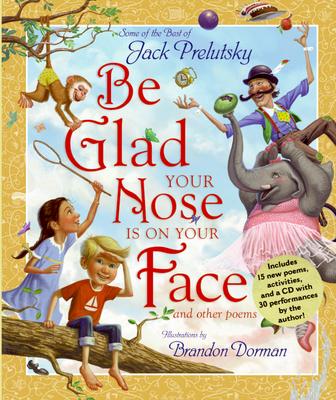
Jack Prelutsky, the United States' first ever Children's Poet Laureate, is another favorite. Try The New Kid on the Block or Be Glad Your Nose Is on Your Face. 

For a sample of what you're in for, here's an excerpt from a poem of Prelutsky's entitled "As Soon as Fred Gets Out of Bed"
As soon as Fred gets out of bed, 
his underwear goes on his head. 
His mother laughs, "Don't put it there, a head's no place for underwear!" But near his ears, above his brains, is where Fred's underwear remains.


For older kids at your Read-Aloud, try Jabberwocky, illustrated by Christopher Myers. This urban sports spin on the Lewis Carroll classic will surely get the kids talking. Hip Hop Speaks to Children, edited by Nikki Giovanni, may appeal to the older crowd as well.  

Of course, Poetry Month lends itself as much to activities as it does to reading ideas. Before you start reading, ask the kids what they think a poem is -- you'll be surprised at how many people can't answer this question! 

Lists of rhyming words created by the Sullivan
House kids and volunteers.

Talk about rhyming and make a group list of words that rhyme. Use a white board, chalk board or flip chart. Start with a simple word and write down all the words that rhyme with it. Pick a few lines from your favorite kid's poem and clap your hands as you say them out loud to give everybody an idea of what meter is without even mentioning the term!

After reading as many poems as you and your audience can handle, put them to work writing their own! Have the kids work individually or in pairs to write poems on a subject that everybody knows about, like a favorite food or outdoor place. Here are some tips about writing poetry about gardens you could adapt for your Read-Aloud.

If the kids in your Read-Aloud are younger, write a poem or a story in a group. Pick a subject and have each child add one word that you write on a big sheet of paper in front of everyone. Jack Prelutsky's website offers more ideas for poetry activities, including How to Write a Funny Poem.

If you usually read storybooks at your Read-Alouds, the switch to poetry could be welcome! Take this month as an opportunity to shake things up and get silly with the combination of children's poetry and children.

Post by The Reading Connection intern Anna McCormally.


To receive credit for this online training, please fill out the form here.

Monday, March 9, 2015

Unlocking the Rosetta Stone: How to Share Nonfiction with Kids


In a previous blog post, we opened up the wonderful world of nonfiction books for kids. Nonfiction is important because kids love it, it provides facts and it's plentiful.

Once you've selected some nonfiction books (using the tips and sample series provided in the previous post) you may want to think about how to read nonfiction aloud. It's different experience than reading a fictional picture book or a novel. With a little preparation, you can include nonfiction in your Read-Alouds with ease.


To share nonfiction with kids, think out loud to explain how nonfiction works.


With very young children, that could be as simple as pointing to a picture of a mother animal and its baby and then pointing to their names in the text as you say them. It's also a good idea to explain to young listeners that fiction books are made-up stories, but nonfiction books contain true information.

Mother and baby animal names "Deer and Fawn" and
"Koala bear and Joey" are in the top margin of this book,
I Love My Mommy Because... by Laurel Porter-Gaylord


With an older listener, say 7 years old or older, you could explain what a table of contents is (if the book you are reading has one) as you open the book. Demonstrate how to use it. Also explain features like the index or glossary.

Page through the book, pointing out graphs and sidebars. Explain that sometimes they contain important information not found in the text. Demonstrate how to use them.

Finally, explain concepts of comparison, sequence or providing examples. Show how sometimes the words the author chooses can signal that she is making a comparison, setting up a sequence or providing examples. Point that out when you see it in the text.

The Rosetta Stone, with text of the same
decree in three languages. provided the key
to understanding Ancient Egyptian  hieroglyphs.
By modeling how to read a nonfiction book, you are giving kids the Rosetta Stone--the secret to unlocking the knowledge they seek. Kids don’t know how to do this, but you can show them how if you point out design features, describe how you are looking at graphics, or model using tools like an appendix to find information. 


Ways help kids read nonfiction
By slowing down when you read nonfiction aloud, and spending time on the elements described above, you not only help kids understand what you are reading about, but also help them build their own skills to successfully navigate nonfiction text.


Before you share a nonfiction book with kids, see if you can find examples of some of the things listed below.

  
Vocabulary and Comprehension
Graphics and Illustrations
Design Features (table of contents, index, appendices etc.)

Teach new words in advance
and
define words while reading

Use visual thinking: Ask
What do you see in this graphic? What makes you see that? What else does it show?

Use title and table of contents to get kids thinking about the topic and what they already know about it
Point out and define
Signal and Academic words
(compare contrast, sequence
or examples of a concept)

Does this graphic give examples of what the words say or does it provide extra information?

Point out chapter titles, headings, subheadings and definitions

Find the main idea and point it out, then find supporting
ideas and point them out

Where can I find the answer to my question? In the words? In the graphics? In my own head? By combining any of these?

Point out sidebars, insets and captions and explore the information they contain.

Ask questions to see if kids understand
what you are reading
along the way

Question the picture: Does it make sense? Is it accurate? Does it support the words?
Could you make a better picture?

Search for answers to kids questions using the index and appendices


In addition to these elements, the format of the book will affect how you read it aloud. Some children's nonfiction reads like fiction, so you can read it straight through, like Groundhog Day! Other books are better suited to jumping around to answer kids' questions, reading bits and pieces here and there. Be sure to read through books first to get an idea of the best way share them with kids.


reads like fiction
reads like a reference book


             VS.


One way to ease into reading nonfiction with kids is to pair it with fiction books on the same topic. Here are two of our favorite books about ice cream.  


Joe runs a soft-serve stand in the summer, but no one knows where he goes in the winter. Rhyming text and double-page illustrations describe where people imagine him to be.


In which Elephant struggles with the dilemma:  Should he share his ice cream with Piggie?  The longer he dithers, the more his ice cream melts.  What to do?


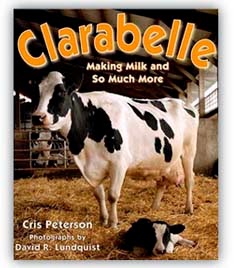
For most kids, ice cream comes from the store.  By providing books about cows, milk, dairy farming and how ice cream is made, kids can learn about the different parts of the process.


Another way to get kids into nonfiction is to create a treasure hunt. Choose a variety of books on a single topic, from a series or by the same author.  Read through them to find a question or two that each can answer. Be sure the difficulty of each question is appropriate for the age of the children you are reading with. Write the questions on index cards, with the title of the book.  

What animal weighs the same as
a ping pong ball?
How long are the tentacles of
the sun jellyfish?
What is the strongest animal for
its size?

Which animals have dangerous kicks?
Which animal kills more people in Africa
than any other?
How many animals called
"Goliath" or "Pygmy" are
in this book?  What do the words
Goliath and pygmy mean?

In addition to specific questions for kids to find in the books, generate some general questions too:
  • Which dangerous animal is your favorite and why?
  • If you could be one of the animals in the book, which one would you like to be?
  • Have you ever seen any of these animals?
When the kids choose a book they want to explore, work with them to find the answers to the questions. The questions you bring with the books are just a tool to get the kids exploring. If they start generating their own questions, follow their lead and look for those answers instead. 

Keep track of the answers to questions, so you can share them with the group at your Read-Aloud. Most kids like providing cool facts to their peers.
 
Kids are bound to get excited about all the things they can learn through a nonfiction book once they know how the books work. Whether you choose to do an all nonfiction Read-Aloud or just to include more nonfiction books related to your theme, be ready to follow the kids' lead, hunt for answers to their questions and provide more books for them to explore.


To receive credit for this online training, please fill out the form here.

Tuesday, February 24, 2015

The Amazing World of Children's Nonfiction

What do kids love to read, is abundantly available, feeds reading motivation and strengthens comprehension, all at once?  Nonfiction books. Kids love nonfiction and they benefit from reading it, and yet one study shows that first-grade teachers allotted only 3.66 minutes per day for reading nonfiction in the classroom.


Why read nonfiction with kids?
Kids are curious. They are hungry to learn facts about subjects that interest them (think dinosaurs, for example). In a recent survey by Scholastic, when asked what kinds of books they want, 43 percent of kids ages 6 to 17 said they want books that will teach them something new. Kids are asking for nonfiction! The great news is that half of the library is nonfiction. There are so many topics and formats to interest kids, literally something for everyone!

We can also see physiological evidence that kids like nonfiction. Brain scans show that the medial ventral orbitofrontal cortex, the part of the brain associated with rewards, lights up when readers “get it." This is in addition to the part of the brain that reacts to pleasure, which also reacts when a kid enjoys a nonfiction book.
medial ventral orbitofrontal cortex

Reading nonfiction builds vocabulary and background knowledge, which play a critical role in reading comprehension. This is important for all kids, but for kids who are learning to speak English, exposure to nonfiction books is one of the best ways to build their vocabulary and background knowledge.

Background knowledge is like learning Velcro: it helps kids catch and connect what they know with what they are learning and also helps them retain new ideas. Sometimes it is hard for kids to build their background knowledge or hard for them to use it, so they need lots of practice. Reading nonfiction can provide that opportunity.

Reading nonfiction also helps kids learn complex sentence structure. In addition, it exposes them to academic language such as "compare and contrast" and "analyze," which they need for test taking. Those words almost never occur in fiction.

What qualities should you look for when choosing nonfiction to share with kids?
When looking through nonfiction books on your chosen topic, look for books that are engaging, accessible, multi-layered and accurate.

• Engaging: having high-quality writing, illustration, design and content, and featuring topics that interest kids


• Accessible and age-appropriate: gather multiple texts on the same topic to provide varying degrees of difficulty and different points of view


One word and bold pictures
for babies and toddlers
Large font, simple text
and experiments
for preK-2nd grade

More information, headings,
and graphics for 2nd-5th grade


Small font, lots of text, complex
explanations and experiments
for 4th grade and up

• Multi-layered:  containing layers of information with degrees of difficulty, so you can learn from a quick first reading but also gain more knowledge by re-reading and digging deeper


From Steve Jenkins' Biggest, Strongest, Fastest
Here is an example of a book that provides information in layers.  You can read the large text on each page quickly with a young child.  You can read smaller text and explore illustrations with an older child. You can also dig deep into appendices and charts provided at the end of the book.

• Accurate: Look through books for obvious inaccuracies before sharing them with kids and point out inaccuracies or discrepancies if you find some when reading with kids. Science and countries' borders change quickly these days.

Some of TRC's favorite nonfiction authors include the following:

Byron Barton, Nic Bishop, Lois Ehlert, Steve Jenkins, Gail Gibbons, Anne Rockwell, Seymour Simon and Joan Sweeney.

                         
Favorite Series:


Books in the Let's Read and Find Out series, some of which are pictured above.           


DK has made nonfiction books its niche.  They publish nonfiction board books, early readers and formats for older readers. Some of their series are Eye Know, Eye Wonder, See How They Grow, Watch Me Grow, and Eye Witness.

Books in the Magic School Bus series by Joanna Cole and Bruce Degen

Magic Tree House Research Guides by Mary Pope Osborne


Scientists in the Field series

Books published by National Geographic Kids, including board books, early readers, picture books and almanacs.


The children's librarians at your library can provide excellent guidance and suggestions if you are looking for nonfiction for a certain age range of kids or on a specific topic. From history to science, math, music, art and biography, there's a kids' book out there to feed your young readers' curiosity.

In our next blog post we'll explore the best ways to share nonfiction with kids.

 To receive credit for this online training, please fill out the form here.