TRC Read to Kids

Welcome to The Reading Connection’s blog, where you’ll find the best guidance on reading aloud to kids. Whether you are a TRC Read-Aloud volunteer, parent or student, the book themes and crafts ideas, child development guidelines and recommended websites will expand your world. For 25 years, The Reading Connection has worked to improve the lives of at-risk kids by linking the magic of reading to fun experiences that inspire a passion for learning. Visit our website at www.thereadingconnection.org.

Monday, April 16, 2012

Say it again: the benefits of repetition

Anyone who has worked with young children has probably experienced firsthand the ability of kids to do the same thing over and over...and over...and over again. For hours. But while this may be frustrating for older minds that like to finish one thing and move on to the next, remind yourself that repetition is a valuable teaching tool for young kids. By repeating phrases or stories over and over again, kids learn about patterns and prediction, both of which are valuable skills when learning to read.

Rhyme and repetition, which stick naturally in a reader's brain, do something incredible: they empower the reader. For a child learning to read and to appreciate books, being able to guess what comes next is a wonderful feeling.


A classic example of this is the story of Chicken Little, who thought the sky was falling and ran around telling everyone he met. The phrase, "the sky is falling!" is repeated throughout the story--giving readers a chance to shout it out and a reason to build up the level of excitement over the course of the book! This story also gives a great example of how rhyming can function to make a story sillier and more entertaining: traditionally, the characters Chicken Little meets in the story have names like Henny Penny, Goosey Loosey, Ducky Lucky and Foxy Woxy. 

Many folktales share these characteristics along with their repetitive structures. Some other great examples of folktales with repetitive structures and refrains are The Little Red Hen, Goldilocks and the Three Bears and The Three Little Pigs.


Another great use of structural repetition can be found in cumulative tales. These stories follow the structure of There was an Old Lady Who Swallowed a Fly. On each consecutive page, another element is added to the story and the whole group is reviewed in the order they were added. Then, at the climax, one last addition joins the group which tips the balance and it all unravels. Luckily for the young reader, the group comes apart in the same order it got put together, so she'll know what's coming next, which is a great feeling.


Another great story with repeated phrases is The Very Hungry Caterpillar. Think:

"And he was..."
"STILL HUNGRY!"
"Still hungry! How did he get so hungry?"


You can use repetition in activities, as well--one fun game is, "I'm going on a picnic and I'm bringing..." where you go around in a circle and each child has to remember all the things that were added to the picnic basket and then add something of his or her own. This game can be played with food, but there are endless variations, and you can split the kids in to groups so that the circle doesn't get too big, making it a little easier for younger children. 


Rhyme often occurs side-by-side with repetition--and both are great tools for developing memory skills--but rhyming poetry or songs are just as fun on their own.  Prepare for a Read-Aloud that focuses on repetition or rhyme with a round of "Boom Chicka Boom":


I said a boom chicka boom (echo)
I said a boom chicka rocka chicka rocka chicka boom (echo)
Uh huh (echo)

Oh yeah (echo)
One more time (echo)
___________ style (echo) 


Fill in the blank with the style the next round will be in: whispering, opera, with British accents--anything you want.  And you never know, by the end, the kids could be begging to do it all over again.

Post by The Reading Connection intern Anna McCormally.


To receive credit for this online training, please fill out the form here.

Monday, April 9, 2012

Parts of a Book: The Importance of Book Mechanics

While Read-Alouds are about getting kids excited for the stories inside books and giving them information on all their favorite subjects, there's another part that we talk about less frequently: helping kids learn about books in general.

Children who grow up in families where books aren't an integral part of daily life may not be as familiar with the parts of a book as kids who use books every day. Helping kids at Read-Alouds get comfortable with the way books are organized is just as important as inspiring them to read on their own or teaching them how to sound out words. It's part of the mechanics of reading. 

In Read-Alouds, take time to emphasize the parts of a book.


How to hold a book
If you're not too familiar with books, you might not know how to hold one--it's important to be gentle and not pull too hard on the pages or bend the spine. This you can show by example, and when kids are picking out books to take home, gently correct a child who is being too rough with it. Hold the book, smooth the cover, and say, "This looks like a great book! What a beautiful cover. Remember to treat it nicely." Observers will learn from your example.

The cover and title page
When you first bring out a story, take a minute to show the cover to the audience. Ask what they can guess about the story from the front of the book. Who will the characters be? What does the title tell us? Point out where the author's name is and read it out loud. Despite the old saying about not judging a book by its cover, learning to discern what a book is about from its cover is an important skill.

What can we take from the cover of Yertle the Turtle and Other Stories? Well, we know it's by Dr. Seuss. Ask your audience what they know from experience about Dr. Seuss books. (There will probably be silly words and rhymes.) Point out the picture of the turtles all stacked up--take a minute to talk about what that is all about!

Turn to the title page--note how the title and author's names are printed again. This is true of every book!


Table of contents and chapter list
When you have a reader who is just moving up to longer books--or if you're going to read part of one to a group--take a minute to show off the table of contents or the chapter list. Some nonfiction books will have a table of contents that shows where different sections begin and end. Show the kids how to find which part you want to read, and the corresponding page number. 

Explain how not every book has to be read from the first page to the last page--the table of contents lets you skip around to what you want to read. If it's a nonfiction book and you're working one-on-one with a child, let him look through the table of contents and pick which section he wants you to read. 


Index
The first page of Shel Silverstein's Everything On It index.
Like the table of contents, knowing how to use an index is an important reading skill. Fast-forward a few years and the kids you're reading to will be asked to do a research project in school. The point of using an index is to give the kids practice finding relevant information inside books. You can give your readers a head start by helping them understand the concept of an index. It sounds like such a little thing, but the difference between knowing what an index is and how it's used and not knowing will make a big difference!

Note to your readers that the index is located at the end of the book, whereas the table of contents is at the front, and that the index works alphabetically (talk for a minute about what that means) while the table of contents lists things in the order they appear in the book.

Understanding how a book works is just as important as knowing how to read one. Don't devote an entire Read-Aloud to talking about how indexes work or what information is available on the title page--that's what school is for, and Read-Alouds are primarily about having fun with reading. But, you can integrate this kind of important information about book mechanics into every Read-Aloud you do. Even though it may not seem like it, doing so can help give readers a big advantage when it's time to use books in the rest of their lives. 

Post by The Reading Connection intern Anna McCormally.


To receive credit for this online training, please fill out the form here.

Monday, April 2, 2012

Give-Away Book Cheat Sheet

Sometimes the kids at a Read-Aloud need your help to pick a great book to take home with them. If you're not regularly immersed in the world of kids' reading materials, you may need some help knowing how to help kids find books they'll like. Here's a primer to get you started.

Early Readers
These books are geared for kids who are getting their feet under them in reading on their own. Early readers are leveled, where level one is made up of very simple sentences and level four is basically a very short chapter book. They are almost always the same size, a tad larger than a normal novel, but very thin. Many titles are nonfiction or based on popular movies, such as Star Wars and Cars.

Graphic Novels 
Graphic novels are a great choice for "reluctant readers" who are intimidated by lots of words on a page. Graphic novels tell a story in comic book style. Among the graphic novel series that kids love these days are Babymouse (kids often consider it a series for girls), Lunch Lady (see below), Squish and Bone (more advanced).

Illustrated Chapter Books
  • Geronimo (and Thea) Stilton books combine text, cartoon-like drawings and words in playful type.
  • Diary of a Wimpy Kid books are written to look like a diary and they mix in stick-figure drawings along with the text. There are now lots of spin-offs that have text written in a similar manner.
  • Books in the Captain Underpants series are a mix of graphic novel and fiction writing and are fast-paced and silly.

Popular Chapter Book Series
  • Judy Moody & Stink: Judy is a fun-loving and energetic third-grader. She and her brother, Stink, have all sorts of adventures. 
  • Junie B. Jones: She has a tendency to get into sticky situations in both kindergarten and first grade.
  • Magic Tree House: Jack and Annie travel through time on their adventures, landing in a different time period in each story.
  • Goosebumps: Scary stories, popular with 9- to 11-year-olds.
  • American Girl: Girls who lived in various times throughout American history share their stories.

When helping a child pick a book, some key tips include the following:

  • Browse the selection before the children start picking books so you know what is available. 
  • Put out a variety of titles from each book type, displaying the covers. The aim is to give the kids choices, but not to overwhelm them.
  • If a child isn't finding anything she wants to read, ask what kind of topics she likes (sports, animals, fairies, science, fantasy, etc.) and use that as your guide.
  • Use the book cover as your guide about subject matter.
  • Read the description on the back of the book.
  • Flip through the book to gauge text size and line spacing.
  • Listen to what the kids get excited about so you'll know what's popular.
  • Write down titles they're searching for and contact the TRC office to see if those books can be obtained.

If a child gets excited about a book, let him have it, no matter the difficulty level. Even if it's at a more advanced level than you assume they can currently read, they'll get to it eventually. Kids might also feel a special attachment to a book or series they read at a younger stage in their lives.

If you're excited about the book options, the kids will follow your lead. Remember that if a child asks for a specific book, write down the book title and the child's name and contact the TRC office to see if we have it or can get it. For more tips on helping kids pick books check out this blog post from last year.


To receive credit for this online training, please fill out the form here.

Monday, March 26, 2012

This ain't your ninth-grade English class: How to do poetry with kids!

April is National Poetry Month, providing TRC volunteers with a great excuse to delve into the world of children's poetry in their Read-Alouds. 

In addition to being different than the norm and therefore more likely to spark interest, children's poems have the plus of being short and often spaced widely on the page. The language used is usually repetitive, rhyming and unusually vivid. This (and the fact that there are poems written on nearly every subject you can imagine!) will appeal to all of the kids at your Read-Aloud.


Shel Silverstein's poetry is tried and true. Pick up a copy of A Light in the Attic, Where the Sidewalk Ends or Falling Up and don't forget Silverstein's posthumous collection, released in 2011, Everything On It. His poetry makes great use of off-kilter or made-up words, plays on word meanings and onomatopoeia.


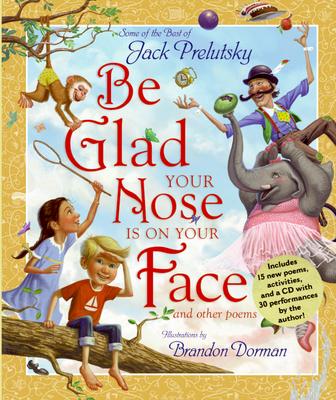
Jack Prelutsky, the United States' first ever Children's Poet Laureate, is another favorite: try The New Kid on the Block or Be Glad Your Nose Is on Your Face. 

For an example of what you're in for, here's an excerpt from a poem of Prelutsky's entitled "As Soon as Fred Gets Out of Bed:"
"As soon as Fred gets out of bed,
his underwear goes on his head.
His mother laughs, "Don't put it there, a head's no place for underwear!" But near his ears, above his brains, is where Fred's underwear remains."


For older kids at your Read-Aloud, try Jabberwocky by Christopher Myers. This urban sports spin on the Lewis Carroll classic will surely get the kids talking. Hip Hop Speaks to Children, edited by Nikki Giovanni, may appeal to an older crowd as well.  

Of course, Poetry Month lends itself as much to activities as it does to reading ideas. Before you start reading, ask the kids what they think a poem is--you'll be surprised at how many people can't answer this question! 

Lists of rhyming words created by the Sullivan
House kids and volunteers.

Talk about rhyming and make a group list of words that rhyme. Use a white board, chalk board or flip chart. Start with a simple word and write down all the words that rhyme with it. Pick a few lines from your favorite kid's poem and clap your hands as you say them out loud to give everybody an idea of what meter is without even mentioning the term!

After reading as many poems as you and your audience can handle, put them to work writing their own! Have the kids work individually or in pairs to write poems on a subject that everybody knows about like a favorite food or outdoor place. Here are some tips about writing poetry about gardens you could adapt for your Read-Aloud.

If the kids are younger, write a poem or a story in a group. Pick a subject and have each child add one word that you write on a big sheet of paper in front of everyone. Jack Prelutsky's website offers more ideas for poetry activities, including How to Write a Funny Poem.

If you usually read storybooks at your Read-Alouds, the switch to poetry could be welcome! Take this month as an opportunity to shake things up and get silly with the combination of children's poetry and children.

Post by The Reading Connection intern Anna McCormally.


To receive credit for this online training, please fill out the form here.

Monday, March 19, 2012

Read Kiddo Read: The inside scoop on what kids really like to read

If you love detective novels, you have probably read some of James Patterson's Alex Cross or Women's Murder Club novels. If you have teens in the house, they might have read his Maximum Ride, Witch & Wizard or Daniel X books. His mysteries and thrillers have topped the best-seller lists for years. In fact, he holds the Guinness Book of World Records title for the most hardcover fiction best-selling titles by one author (63!).

The man is a writing powerhouse, and now, because he is so passionate about books and reading, this award-winning author has created a website recommending great books for kids.

READKIDDOREAD is his site to help grown-ups find books kids will like. Patterson and his wife, Sue, started seeking out appealing kids books when their son was young and not enthusiastic about reading. Their experience looking for books that would excite their child was one of the inspirations for the website.

Read Patterson's piece on CNN.com about how to get kids to become fanatic readers for his take on reading motivation and the importance of reading role models (like TRC volunteers!).
 
READKIDDOREAD is a great resource for Read-Aloud volunteers to use to inspire or plan their sessions with TRC kids. The site includes
  • great book lists by age, theme, genre or issue (like reluctant readers), 
  • reviews of books for kids ages 0 through teen, reviewed by his stable of experienced children's literature professionals and parents,
  • lesson plans for books created by publishers and educators,
  • interviews with authors and illustrators and
  • resource books for you about reading development.

To use READKIDDOREAD to plan a Read-Aloud go to the readkiddoread.com homepage and follow the steps below.
  1. Click on the tab for your age group.
  2. Click on the tab for what type of book you are looking for (storybooks, just the facts etc.).
  3. Click on a book that looks good, read the review and check out the list below the review that says, "If you love this book, then try..."  It will give you ideas for related books for your theme.
  4. Look for the title under lesson plans (on the educators tab) for ideas about activities. Look for ideas that are active and creative.
  5. Check to see if there's an interview with the authors of any of the books you've selected (also on the educators tab) for some fun background info for the kids.
  6. Take all your info and head for the library to look over copies of the suggested titles. Ask the librarian for any other books that might work well for your age range in a Read-Aloud setting.
You can also start planning your Read-Aloud by looking at the many booklists for any occasion found through the sitemap on READKIDDOREAD. The sitemap is directly below the "0-8" tab on the homepage. In fact, you may find it easiest to navigate the site using the sitemap.

While you are at the library picking up fun books for your Read-Aloud or to share with the kids in your life, reward yourself with something fun to read too! Some James Patterson, perhaps?


To receive credit for this online training, please fill out the form here.
Monday, March 12, 2012

Embracing Our Differences

Team 3 at ARHA's Ruby Tucker Center recently chose “Embracing Our Differences” as its Read-Aloud theme.

The team introduced its theme by asking the kids to identify differences and similarities between two of the TRC volunteers who look different (gender, race, height, etc.) but have lots in common (favorite food, love of animals, work in the same city, etc.). They captured the similarities and differences in a Venn diagram. The Venn diagram provided a visual display of how much similarity exists between these two people who look different. 

The team then showed a short video entitled "The Animal Odd Couple," which is a story of a dog and elephant becoming best friends. After watching the video, the team led a discussion about how you might miss the opportunity to have a really great friend if you only focus on exterior differences. 

Here is The Animal Odd Couple video:

The team chose the following two books for the large-group Read-Aloud:
  • I Am America by Charles R. Smith, Jr. Smith is a wonderful photographer of children. This book uses photos to show a diverse group of children doing commonplace American things.
  • It's Okay to Be Different by Todd Parr. Fun illustrations engage children, while the text focuses on acceptance and individuality.  

The small groups used additional books by Todd Parr along with these other theme-related titles: 


For their activity, the kids drew self-portraits. In the words of volunteer Kevin Gilliam, "Recognizing that it is just as important to help the kids take pride in what makes them an individual as it is to accept others’ differences, we asked them to draw self-portraits, making sure to include what made them unique."  

The team is excited about building on this theme in future Read-Alouds by focusing on the diversity in our communities and among our talents.

For additional activities, consider the exploration of two eggs, one with a brown shell and one with a white shell. Have kids describe the eggs' different outside appearances and inside similarities. For details on this idea, click here.  TRC also created a Read-Aloud tips based on this idea back in September of 2010. For even more book and activity ideas check it out.


To receive credit for this online training, please fill out the form here.

Monday, March 5, 2012

What Are You Passionate About?

It's your turn to plan the next Read-Aloud at your site and you're at a loss for a theme. Instead of planning a book or a holiday theme, think about things that excite you. Have you traveled to interesting places? Do you have a fascinating hobby? Your passion is a great place to start for a Read-Aloud theme. The kids will see how excited you are about the topic and will be eager to learn more about it.

A volunteer from the Berkeley on a trip to Africa 
reading to children at a local school.

Prepare for the Read-Aloud by asking your favorite children's librarian for books related to your passion. You'd be amazed at the information available. 

Make the topic come to life by bringing in items to show the kids. If the items aren't fragile, pass them around the group for a more hands-on experience. By showing the kids a picture of you on a safari or a figurine of an elephant that you brought back from Africa, they'll be able to connect stories or lessons about Africa to this real-life experience you had, and the experience they had with you! 


Kids at the Berkeley are really excited about their
camping Read-Aloud in a tent.

Plan an activity where the kids can experience an element of your passion, whether it's trying on special clothes, learning new movements or exercises, reading a map or learning a new skill. Are you an avid soccer player or basketball fan? Read books about the sport, have a discussion about favorite teams and positions and teach them a few basics. Are you passionate about your job? Use your day job as your theme! Find books about your job that relate to kids. See if your organization has kid-friendly goodies that you could bring to the kids. Teach the kids special words related to your passion.

Remember, the idea is to give the kids background knowledge about a topic so when they encounter it again, they'll have some context. Building background knowledge is a crucial element in developing reading comprehension skills.  

Still stuck about what your passions might include? Think about these categories:
  • Places you've traveled or travel in general
  • Your ethnicity or where you're from
  • A favorite sport that you play or follow
  • A crafting hobby (painting, knitting, scrap-booking)
  • An outdoor hobby (camping, hiking, skiing, boating, gardening)
  • Your favorite food or cooking, baking, grilling, canning
  • A favorite animal
  • A favorite art form (music, visual art, dance, theater)
Passion is contagious and all-consuming. The more kids see that you're into the topic, the more they'll be engaged in the Read-Aloud and the less they'll get distracted or act out.


To receive credit for this online training, please fill out the form here.