TRC Read to Kids

Welcome to The Reading Connection’s blog, where you’ll find the best guidance on reading aloud to kids. Whether you are a TRC Read-Aloud volunteer, parent or student, the book themes and crafts ideas, child development guidelines and recommended websites will expand your world. For 25 years, The Reading Connection has worked to improve the lives of at-risk kids by linking the magic of reading to fun experiences that inspire a passion for learning. Visit our website at www.thereadingconnection.org.

Monday, November 18, 2013

This is your brain on poverty

The topic of the TRC Volunteer Seminar held on October 30, 2013 was "This is your brain on poverty." Lib Gillam, a therapist at the Center for Alexandria’s Children, addressed the effect of being homeless on growing children.    
Ms. Gillam began her presentation by describing the Circle of Security. This behavioral model and corresponding graphic provide the best ways of interacting with a child while attending to his needs.  


As the responsible adult at a Read-Aloud, a volunteer is essentially a child’s caregiver for that period of time. Kids need the volunteers to provide a safe haven and secure base where they can feel safe, comfortable and appreciated. The Circle of Security graphic above shows some specific ways in which volunteers can help kids feel safe and secure so the kids can eventually explore and learn new things. Over time, with such support, kids can work through their feelings.

Next, Ms. Gillam described the physiological effects of homelessness and poverty on developing children and the ways in which children's behavior can be affected. When under stress, the body floods the brain with adrenalin and the body and brain go into fight-or-flight mode. Kids growing up in stressful conditions find their bodies persistently in crisis mode. 

Lacking a sense of control and safety in their everyday lives, children living in homelessness and poverty may exhibit changes in their behavior. Ms. Gillam pointed out various triggers and common responses from children under stress. Some examples are:
  • loss of security: she may become hyper-vigilant or emotional
  • loss of control: he may try to take control or act out for a limit to be set
  • loss of attachment from someone: she may become clingy or avoid contact
  • shaken self-concept: he may become withdrawn or look for a role in a group
  • anxiety from adults: she will carefully assess adult enthusiasm versus tension

Because the bodies and brains of Read-Aloud kids are likely in an emotionally-charged fight-or-flight mode, it is important to connect with them emotionally and help them feel safe. Volunteers first need to build a relationship with the child before directing or correcting their behavior. According to Ms. Gillam, the best method is to "Connect, then correct.”

While working with kids under stress may seem daunting, the good news is that positive experiences make a difference in the brain.
Experiences that strengthen connections

  • are frequent, regular and predictable,
  • occur in the context of a warm, supportive relationship,
  • are associated with positive emotions (fun, excitement, humor, comfort),
  • involve several senses and
  • are responsive to the child’s interests or initiative.
Creating a TRC Read-Aloud that is fun, predictable and safe helps kids switch out of fight-or-flight mode and create new, positive connections in the brain. 

When asked what elements of this talk they would use at their Read-Alouds, TRC volunteers said, "Now we understand where kids are coming from." Realizing how consistency supports kids under stress and that the kids need to have fun with them gives the volunteers an informed perspective to planning and conducting Read-Alouds.


To receive credit for this online training, please fill out the form here.

Monday, November 4, 2013

Resilience

What is that special something that enables a person to survive and sometimes even excel under challenging circumstances? What factors or resources strengthen or bolster a child? The September 2013 issue of Educational Leadership explored the concept of resilience and its role in learning.
     
A study described in the issue, Resilience and At-risk Children and Youth, explains that resilience has two parts: "1) An exposure to great risk; and 2) Corresponding factors that help promote positive outcomes or reduce negative outcomes." (p. 3) At-risk children, like the kids TRC serves, often experience multiple risk factors. When these factors occur together, they multiply the behavior problem. For example, "children in families that had accumulated two risk factors showed a more than fourfold increase in behavior problems" when compared to families with one stress factor. (p.4)

In the same issue of Educational Leadership, Nan Henderson’s article, Havens of Resilience, describes protective factors that help kids develop their resilience. The author created a graphic, the Resiliency Wheel, that represents the resiliency-building conditions that have been identified through research.

 Nan Henderson's Resiliency Wheel
from Educational Leadership, September 2013


According to Henderson, the most important environmental protective factor is providing caring and support. The other five factors grow out of it.


The structure and content of TRC's Read-Aloud program provide several protective factors that help kids weather challenging situations. 

At the beginning of each Read-Aloud, volunteers set and communicate high expectations and also set clear and consistent boundaries when they remind kids about TRC’s Promises (Listen, Respect, Cooperate and Have Fun). Consistently reminding the kids about the Promises and enforcing them every week helps the kids know what to expect and reduces their stress.

Every time a volunteer asks a child for his opinion about a story or encourages her to choose a book to take home, the volunteer is expressing his perception of the child as a reader, another high expectation.

By taking the time to ask questions, listening to what kids say about the books being read aloud and providing engaging activities, volunteers create opportunities for meaningful participation and teach life skills.

Getting to know the children and encouraging positive interaction with their Read-Aloud peers increases prosocial bonding. Meeting weekly throughout the year creates a community of readers that cares for and supports each other. This social aspect of the Read-Aloud experience helps kids feel connected to other readers in their neighborhood and to the reading community at large.

The hour each week that TRC kids spend at a Read-Aloud supports their growth as readers and provides them with a positive, consistent, engaging environment that fosters their resilience. Reading with volunteers provides a healthy escape from stress and creates a supportive, caring community that the kids can count on. TRC's Read-Aloud program helps kids become frequent and passionate readers, but it also does so much more in the process.

Nan Henderson, Havens of Resilience, Educational Leadership September 2013, Vol. 71 No. 1, pp. 23-27.

Jan Moore,  Resilience and At-Risk Children and Youth, National Center for Homeless Education, April 2013.

To receive credit for this online training, please fill out the form here.

Tuesday, October 22, 2013

Worms Read-Aloud

A few weeks ago, the volunteers at Sullivan House held a Read-Aloud about worms. They brought in live worms and let the kids get some hands-on experience while reading about these slimy creatures.  

The volunteers began their worm night by reading Diary of a Worm by Doreen Cronin. This humorous picture book details the life of a worm kid diary format, including eating his homework and having a hard time doing the Hokey Pokey. While keeping the kids laughing, this book also teaches a few interesting facts about worms. 

They read aloud Yucky Worms by Vivian French next. In this book, a little boy and his grandma find a worm in her garden. The boy thinks the worm is yucky until his grandma teaches him all the interesting things she knows about worms.

After reading both books, the group discussed some of the facts it had just learned from the books, including the following:  
  • Worms' heads are pointed and their tails are rounded. 
  • Worms are segmented and this helps them move through soil. Their movements loosen the soil and aerate the ground.
  • Worms eat dead organic material. They also eat small amounts of garbage and small rocks.
  • Their waste fertilizes the soil. 
  • Worms can regenerate segments of their bodies.
  • Some worms can grow up to 22 feet long.
  • Worms do not have lungs. They breathe through their skin.
  • Worms have no eyes.
After reading in a large group, the volunteers passed out real worms and magnifying glasses, and gave the kids time to examine the worms. This exercise triggered many questions from the kids, which they discussed with the volunteers. They also read some additional books in smaller groups. After washing hands, the group enjoyed a snack of gummy worms.

The volunteers brought a wide variety of fiction and nonfiction books to read in small groups. Some of their favorite additional titles were Inch By Inch by Leo Lionni and Wiggling Worms at Work by Wendy Pfeffer.


If you're not up for digging up your own worms, you can purchase 12 night crawler worms at PetSmart or other pet supply stores for about $4.


To receive credit for this online training, please fill out the form here.

Tuesday, October 8, 2013

Race for a Cause


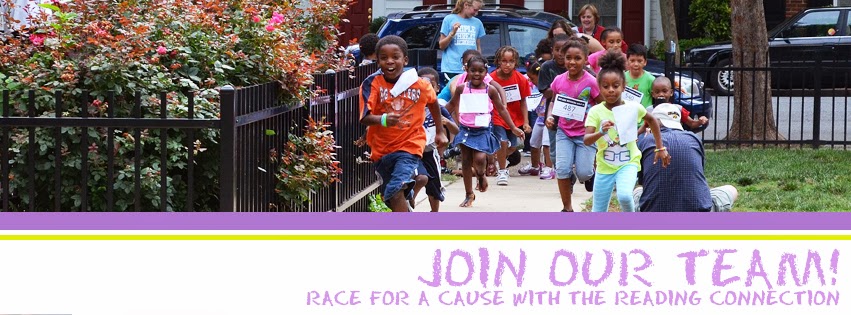
The 2013 Acumen Solutions Race for a Cause 8k & 1-Mile Fun Run is this Sunday, October 13, 2013. We hope you'll join us for an October morning of outdoor fun. 
  
By registering to run or walk in the 8k or 1-Mile Fun Run, you will support TRC's important work. This is a great opportunity to invite friends, family members and colleagues to join you in supporting TRC. 
  
The race begins at 8:00 a.m. The start and finish line is on North Quincy Street, near the intersection with Wilson Boulevard, in Arlington, VA and just a few blocks from TRC's office. 

When you register for the race at www.theraceforacause.com, remember to select TRC as your nonprofit choice. Make sure you register soon because registration closes on Thursday, October 10 at 9:00 p.m
  
If you already have registered for this year's race, thank you. If not, this is the time to step up and support TRC! If you have other plans for Sunday and cannot be there, you can still help by sponsoring a child from our program who wants to participate.

We hope you'll join us for a fun, healthy and rewarding Sunday morning. Your support will help TRC in its mission to create and sustain literacy-rich environments for at-risk children in our community.

We look forward to seeing you there! 

Monday, September 30, 2013

The Day the Crayons Quit


Crayons have feelings too, you know.

In the delightful new picture book The Day the Crayons Quit, written by Drew Daywalt and illustrated by Oliver Jeffers, crayons tell a little boy just how they feel about their workload, stereotypes and inter-crayon relations. The crayons’ complaints are funny and kid-friendly, but will also resonate with grown-ups, making this an ideal book to read aloud.

One day, when Duncan opens his crayon box to do a little drawing, he finds a stack of letters, but no crayons. Each of the twelve crayons in his box has written Duncan a letter explaining its reasons for going AWOL. Red is overworked, Purple has control issues, Beige is underappreciated, Gray seeks diversity in his tasks, Orange and Yellow are fighting and Green is caught in the middle. And so it goes.


As the crayons’ manager, can Duncan address his workers’ issues and get them back to work? To be successful, he’ll have to think outside the (crayon) box!

Nearly all the text in this book is in the form of short letters from the crayons to Duncan, making it well suited to reading aloud to a group. Each letter is accompanied by a picture featuring the complaining crayon. Before reading each letter, readers can ask listeners to predict what each color is unhappy about, and of course ask them to predict what Duncan will do to resolve the situation.


Both the story and the illustrations beg you to break out the crayons or to imagine what other toys or household items might think about their situation. Are your Legos dissatisfied? Do the dress-up clothes in your toy box lament being typecast? What about your kitchen appliances? Do they have DIY home improvement aspirations? Get your kids imagining and talking about the ordinary objects in their lives using this book.

The Day the Crayons Quit would work well when paired with other books about unhappy workers, like Click Clack Moo: Cows That Type by Doreen Cronin, or with books about letters like Toot & Puddle by Holly Hobbie, Dear Mrs. LaRue by Mark Teague or The Jolly Postman by Janet and Allen Ahlberg. And, you can always go the unorthodox color book route with Lemons Are Not Red by Laura Vaccaro Seeger.

No matter what you choose to read with The Day the Crayons Quit, the cheeky crayons and Duncan’s sympathetic and creative response to them will delight readers and listeners alike!


To receive credit for this online training, please fill out the form here.

Monday, September 23, 2013

Building readers, one child at a time

Last week, four-year-old Diana and her mother came to the Columbia Grove community room to check out the Read-Aloud program they'd heard about. Diana was far from convinced that this was where she wanted to be and clung tightly to her mother. 

A volunteer talked with Diana one-on-one to help ease her transition into the Read-Aloud program before bringing Diana and her mom to where the other kids and volunteers were reading. Diana sat on her mom's lap during the reading, but it wasn't long before she was pointing to things in the book and making her own balloon rocket. 

Diana tells about her Read-Aloud experience

At the end of the hour, I checked back with Diana to see if she'd changed her mind about the experience. She was grinning ear-to-ear and was eager to share that she'd be coming back. When asked what her favorite part was, she replied "When they read a book."

We hope all of the children and families that we serve feel the way Diana did about reading. In the past fiscal year, The Reading Connection reached a total of 1,824 children and gave them 12,498 books. The Read-Aloud program, which Diana participated in, reached 495 children in Virginia and DC with the help of more than 200 community volunteers. With your help, volunteering or donating to TRC, we can have an even greater impact each year to come.

Monday, September 9, 2013

Channeling high energy into active learning

A recent article in The Atlantic by author and middle-school teacher Jessica Lahey focused on making classroom environments more welcoming to boys. It got me thinking about ways to channel all kids' natural energy into active learning about books and reading.

Instead of endlessly shushing kids and telling them to sit still, why not tap into their natural need to move and inherent curiosity and creativity? The Atlantic article I mentioned above cites a study about classroom techniques that are especially successful with boys. It also points out that these methods can be used effectively with both boys and girls. Here are some of the techniques, adapted to pertain to reading aloud with a group of children.

While preparing to read with kids, look at the books you are using and think about ways you can:

  • Make the experience more dramatic by using novelty or surprise.
    If the kids are expecting a straightforward read-through, delight them with props or change your voice to differentiate between characters. Use varied pacing as you read to build suspense. Have more than one adult read the story aloud together. Try Yo! Yes? by Chris Raschka with two people.

  • Encourage independent, personal discoveries and realizations by helping kids connect what you are reading with something they already know. Allow time for discussion that lets the kids have an "Aha!" moment where they can connect something they already know or have experienced with what you are reading. While reading, ask questions like, “Does this remind you of anything?” or “How do you feel about what just happened?” Watch the light bulb go on over their heads and their excitement build as new knowledge clicks with old.


When you are planning reading-related activities, think about ones that:
  • Result in an end product.  Encouraging kids to apply their own creativity to a topic they've just read about builds both motivation and comprehension. Think superhero masks, rain sticks, flip books or anything the kids can create and take with them. The best kinds of projects are related to the theme and open-ended, allowing for creativity and interpretation.
  • Require a combination of competition and teamwork. Sometimes we learn best from each other. Games and team projects allow kids to share knowledge and support each other's learning. Get kids to start accessing their background knowledge about a specific Read-Aloud theme by playing Jeopardy or a trivia game before you start reading. Or, strengthen their comprehension about the theme by playing a related game after reading. At a recent Read-Aloud at Columbia Grove about fish, a volunteer created a game with pictures of different kinds of fish that the kids, working in teams, organized according to different criteria:  fresh water vs. salt water, smallest to largest, predator and prey. 
  • Require motor activity. Some kids learn best by moving. Physical activities such as doing puzzles or running relay races related to your theme, or acting out a story let the kids use a different part of their brain during the reading process. More generally, taking a break from reading to play Simon Says, Red Light Green Light, or using TRC’s activity cube or Energizers can help kids better focus on the reading experience.
Encouraging kids to use their energy to be actively engaged in listening to, thinking about, talking about and understanding books makes for better learning and more fun for everyone!


To receive credit for this online training, please fill out the form here.