TRC Read to Kids

Welcome to The Reading Connection’s blog, where you’ll find the best guidance on reading aloud to kids. Whether you are a TRC Read-Aloud volunteer, parent or student, the book themes and crafts ideas, child development guidelines and recommended websites will expand your world. For 25 years, The Reading Connection has worked to improve the lives of at-risk kids by linking the magic of reading to fun experiences that inspire a passion for learning. Visit our website at www.thereadingconnection.org.

Monday, February 22, 2016

We like to move it, move it!

Kids need to MOVE! It doesn't matter whether they've been snowed in or sitting all day at school. Including movement in every Read-Aloud gets blood circulating, bringing oxygen to the brain and helping kids stay engaged. Movement also makes many kids more comfortable. And it’s fun! 

Here is a collection of our favorite movement ideas from previous blog posts, plus a couple of new ideas.


Bubble Wrap Dance Party

That's right: put bubble wrap on the floor, turn on some music and dance! TRC has lots of bubble wrap on hand at the office for you to use at your next Read-Aloud. 

Read some books about music, dancing or noise and get dancing! The kids will love the satisfying snap the bubble wrap makes at they cut the rug.


Yoga
Some days, you might be looking for a more serene option than a bubble popping dance party. Why not try yoga? Have the kids take five or six deep breaths, stretching their hands high on the inhale and rounding their hands back to "heart center" during the exhale. That kind of movement works wonders in calming down a group of kids. 

For more kid-friendly yoga moves, here are some poses that elicit group movement and concentration: 
• Use these yoga warm-ups to imitate things kids are familiar with. such as a tree and a pea.  
• Finish with a seated position so kids are ready to listen to a story right after finishing.

For more detailed instructions on how to incorporate yoga in your Read-Aloud, check out this blog post or TRC's Volunteer Central (search for "yoga" under Read-Aloud themes).


Energizers
One of our favorite sources of movement activities is a book entitled Energizers!  88 Quick Movement Activities that Refresh and Refocus by Susan Lattanzi Roser. Many of these activities have accompanying videos online so you can see how they work in action. 


To see some of our Energizer favorites, including "Tootie-Tah," "Go Bananas!" or "Dum Dum Dah Dah," check out this blog post.

Active Themes


Another way to get the kids moving is to choose a Read-Aloud theme that is active by its very nature. Try a Read-Aloud about soccer, running, dance or ninjas. Even a Read-Aloud about cooking or painting gets hands and brains working. Or look for books related to your theme that encourage movement and get the kids moving to them while you read. 


Move at every Read-Aloud

Include movement in any Read-Aloud, regardless of theme, with the following:  


Incorporating movement into your Read-Aloud in any way will improve the experience for the kids. It will meet their physical needs, allowing them to enjoy listening to stories, and demonstrate to them that reading doesn't always have to be a sedentary activity.


To receive credit for this online training, please fill out the form here.

Monday, February 8, 2016

And the winner is...Making sense of children's book awards

Last month the children’s book community held its early morning version of Oscar night. The American Library Association (ALA) announced its annual youth media award winners, with the glittering gold Newbery medal awarded to Last Stop on Market Street, written by Matt de la Peña, and the gilded Caldecott medal to Finding Winnie: The True Story of the World’s Most Famous Bear, illustrated by Sophie Blackall. Thanks to these awards, these books will experience a big bump in exposure and find more readers than ever.


When it comes to deciding what books to share with the young readers in your life, there is so much to choose from! The process can be intimidating and confusing, even for folks who are experts in this area. But if you can become familiar with the players in this field, you’ll be able to find great titles and guide your young readers to the very best in children’s books.

So who really knows children's books?


Trust librarians
Newbery Award
Librarians are an excellent resource for finding any book. But they are particularly good at sniffing out the best ones and then spreading the word about them. The librarians of the American Library Association present the best-

Caldecott Award
known and most prestigious awards for children’s books. This includes the Newbery Medal, which is annually awarded to the author of the most distinguished contribution to American literature for children, and the Caldecott Medal, which is awarded annually to the artist of the most distinguished American picture book for children. 


The ALA also annually presents the following important, more focused awards:

The Coretta Scott King Book Awards, honoring outstanding African American authors and illustrators of books for children and young adults that demonstrate an appreciation of African American culture and universal human values. The author award winner this year was Rita William-Garcia for Gone Crazy in Alabama. The illustrator award went to Bryan Collier for Trombone Shorty.


,
The (Pura) Belpré Medal, honoring a Latino/Latina writer and illustrator whose works best portray, affirm and celebrate the Latino cultural experience in an outstanding work of literature for children and youth. The 2016 author award went to Margarita Engle for Enchanted Air: Two Cultures, Two Wings: A Memoir. The illustrator award went to Rafael López for Drum Dream Girl.


The (Theodor Seuss) Geisel Medal, honoring the author(s) and illustrator(s) of the most distinguished contribution to the body of American children’s literature known as beginning reader books published in the United States. This year's winner was Don’t Throw It to Mo!, written by David Adler and illustrated by Sam Ricks.

The (Robert F.) Sibert Informational Book Medal, honoring the author(s) and illustrator(s) of the most distinguished informational book published. The award this year went to Funny Bones: Posada and His Day of the Dead Calaveras, written and illustrated by Duncan Tonatiuh.


The Schneider Family Book Awards, honoring an author or illustrator for a book that embodies an artistic expression of the disability experience for child and adolescent audiences. The Schneider award for last year went to A Boy and A Jaguar by Alan Rabinowitz, Rain Reign by Ann M. Martin and Girls Like Us by Gail Giles for children's book, middle school and teen book, respectively. The 2016 award has not been given yet.


The current year's Newbery, Caldecott, Belpré, Sibert and Geisel Award and Honor books are included in the ALA’s Notable Children's Books list, which identifies the rest of the best of the best in children's books. The honor books are the "runners up" for the main award, and you'll know them by their silver or black stickers.

All of these award-winners are selected by committees of librarians who have spent an entire year reading as many books as they possibly can.


Trust kids
Librarians aren’t the only ones who can pick out great books. There are lots of book awards made each year by kids! Teachers and librarians often nominate the titles that kids ultimately choose from, but kids do get to voice their choice!

The Children’s Choice Book Awards is the only national book awards program where kids and teens select the winners.


Virginia Reader’s Choice is one of many U.S. Reader's Choice Awards by State that get kids reading, evaluating and voting for favorite books.


Trust your instincts
Take a look at lots of books. Spend some time in the children’s section of the library or bookstore and page through books with and without shiny stickers. Get a feel for what you like, but keep in mind that a book that received a shiny sticker back when you were a child may not have the same appeal to kids today.

And as you come across a great book, share it! What’s on your “Best of” (or even “Worst of) list? Can't you see the headline now “The Best Read-Aloud Books of 2016” by The Reading Connection?


Guest blog post by Belle of the Book, Rachael Walker.


To receive credit for this online training, please fill out the form here.


Monday, January 25, 2016

Race and reading: The power of finding yourself in a book

"Like many of his third-grade classmates, Mario Cortez-Pacheco likes reading the 'Magic Tree House' series, about a brother and sister who take adventurous trips back in time. He also loves the popular 'Diary of a Wimpy Kid' graphic novels. But Mario, 8, has noticed something about these and many other books he encounters in his classroom at Bayard Taylor Elementary here: most of the main characters are white. "I see a lot of people that don't have a lot of color," he said." Motoko Rich, For Young Latino Readers, an Image Is Missing, Dec. 4, 2012, The New York Times.


Imagine never having found yourself in a book. Never having seen yourself, your family or your home reflected in a story you read. How would you feel about books, reading and your place in the world?


This post, in our ongoing series about race and reading*, focuses on the importance of books that reflect the diversity of the children TRC serves. The lack of children’s books portraying children of color in authentic, respectful and engaging ways has a negative effect on a child’s motivation to read.


“When children cannot find themselves reflected in the books they read, or when the images they see are distorted, negative, or laughable, they learn a powerful lesson about how they are devalued in the society of which they are a part.”  Rudine Sims Bishop, Mirrors, Windows, and Sliding Doors,1990. 


TRC is dedicated to helping children become life-long readers, and that means building motivation and a personal sense of belonging in the reading community. Sharing books with kids that explore and celebrate their communities is crucial to building that motivation as well as their feeling of being a valued member of the reading community.


Historically, most of the children's books featuring people of color focused on historical figures (Dr. Martin Luther King, Jr., Diego Rivera) or holidays (Chinese New Year, Cinco de Mayo). Only recently have publishers begun to include books showing children of color having everyday experiences with their families in their own neighborhoods.

It matters what theme you choose to present at a Read-Aloud and the books you bring to explore that theme. By intentionally seeking out the children's interests and providing them with high-quality books that reflect their experiences, you work to counteract the daily slights and snubs that marginalize children of color. So, don't just guess which theme to do next: talk with the kids. Find out what excites and intrigues them and then plan Read-Alouds that explore those interests.


So how do you make the very books you choose vehicles for fostering reading motivation? 


  • Ask the kids about their interests to help determine which theme to do next and which books might be popular in the give-away bin.
  • Vary your Read-Aloud themes so that each session is high interest. Volunteer Central has information on themes and links to Reading Road Maps.
  • Choose the books carefully. Bring high-quality books that are well written, beautifully illustrated, exciting and engaging. (This blog post gives guidelines.) Include both fiction and nonfiction, written at varying levels to accommodate varying interests and attention spans. And, of course, purposely use books that portray children of color in positive ways. The following lists provide information on a wide variety of diverse books:

We Need Diverse Books - Links to lists of books about various diverse groups


Reading Is Fundamental – List reviewed by RIF’s Literature Advisory Board. List includes books exploring a myriad of cultures


Cooperative  Children’s Book Center, University of Wisconsin-Madison - A list of children’s books by and about people of color


Award-winning Multicultural Books, National Louis University - 
Provides links lists of various multicultural book awards and a description of the award itself


Colorín Colorado - A site for English language learners. Provides lists on several cultures and the immigrant experience


Reading Rockets - Provides themed lists on several cultures 


Providing access to books that depict children of color in authentic and respectful ways and preparing exciting, engaging Read-Alouds on topics that interest the kids show them in deeds and words that they are valued and welcome members of the reading community and our society at large. 

*Previous posts on race and reading:
Race and reading: developing personal relationships
Race and reading: the Read-Aloud environment
Working toward the dream: race at Read-Alouds


To receive credit for this online training, please fill out the form here.

Monday, January 11, 2016

Use the Force! Building imagination through book-inspired imaginary play

When Star Wars first appeared in movie theaters in 1977, I was nine years old. My younger brother and I were completely hooked on this space fantasy, as were our two cousins. The four of us couldn’t wait to find out what else was in store for Princess Leia, Han Solo, Luke Skywalker and Darth Vader.


So we didn’t wait. We took George Lucas’ characters, made them our own and played Star Wars on many long, hot summer days.

Star Wars was a revelation for our imaginative play. It presented us with new characters, new situations and an incredible story with an amazing setting. We created our own characters; we thought there should be more girls. We all wanted to be part of the rebel forces, so we made the evil Empire an invisible terror we alternately ran from and attacked. I’m sure neighbors wondered why we were all in the yard wildly wielding sticks as we battled our unseen enemies in lightsaber duels. Other than the sticks, we didn’t have props or any costumes. It was just our four imaginative minds, working together.

Our biggest problem playing Star Wars was who got to be Princess Leia. Thanks to my brown hair, I won out most of the time. But my cousin did not ever want to be Chewbacca. So we added another princess to our band of rebels and Chewbacca went the way of Harvey. 


For some kids, imaginative play comes easily. Others need input and encouragement.

Often kids choose to "play" a favorite movie or TV show because that’s their experience. They know the story, the characters and what the characters usually do. But for some kids, all they do is repeat what they’ve seen. If you have few experiences to draw from or no one to show where imagination could enter in, it is hard to figure out how to play at a more sophisticated level. And children need to reach a sophisticated level of pretend play to help build skills such as creative thinking, visualization, self-regulation, reasoning and problem solving.

So what can you do to introduce alternate settings, characters and experiences and encourage kids to use this knowledge in play? Share books! 

Here are some simple examples:

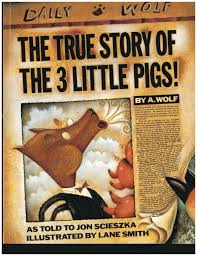
  • Show kids how stories can be changed. Read or tell the traditional tale “The Three Little Pigs” (such as the version by James Marshall) along with The True Story of the Three Little Pigs by Jon Scieszka and The Three Little Pigs and the Somewhat Bad Wolf by Mark Teague. The kids will immediately see that the original version has been changed and will find the changes fascinating. Any story with an original version and variations will work. Fairy and folk tales are especially good.


  • As you read these titles (or any books!), ask open-ended questions, such as “What do you think will happen next?" Pretend play is all about “What happens next?"

  • Talk about the characters—their actions, what they are feeling and what they talk about.

  • Talk about how the versions of the story differ.

  • Get kids to act out “The Three Little Pigs.” Encourage older kids to take the lead and guide younger ones as they play. Make sure everyone understands the role they are playing and remembers how the story is structured. They should use their own words but stay true to their characters and the classic story.

  • Then, the idea is to get kids to change the story, using their imaginations to develop more elaborate scenarios for their characters or even create new characters, and play! If they are having trouble coming up with ideas on their own, help them mash up the pigs’ story with their own experiences or other stories. For example, the pigs might decide to go and stay in a hotel when they lose their houses. What happens? Or Batman comes to stop the wolf from doing any damage. Or Star Wars fans might come up with their own version—“The Three Little Droids”!


There should be a good bit of negotiating and lots of talking when play is working. You might need to step in occasionally to help things keep moving smoothly and model some good play behaviors. If you are playing along, you might also consider throwing some obstacles in the way to encourage everyone to work together to meet a challenge—“let’s figure out how to organize the furniture in the pig’s new house”—or solve a problem—“what can we do to help a little pig with hay fever?”


Listening to stories read aloud gets kids' imaginations working as they create images of the story in their heads. Getting them to act out and change the stories takes their imagination to a new level, encouraging creative thinking, problem solving and reasoning. Especially since so much of our culture is screen oriented, it's important for kids to have practice creating their own images and scenarios. 


Guest blog post by Belle of the Book, Rachael Walker.

To receive credit for this online training, please fill out the form here.

Monday, December 14, 2015

Activities for multi-age Read-Alouds

When trying to keep kids of a variety of ages engaged at your Read-Aloud, the books you choose play a major role, but so do the activities you include. Planning activities that meet the developmental needs of all the kids at your Read-Aloud, while not requiring extra work, can make all the difference. 

Here are some ideas for activities to intrigue and delight all the kids at your Read-Aloud.


Open-ended crafts

If you like to do crafts with the kids at your Read-Aloud, plan simple open-ended ones that allow each kid to create her own product that's as simple or as complex as she wishes.

For example, a Read-Aloud about butterflies could include coffee filter butterflies. Each child gets a coffee filter and a pipe cleaner to make the butterfly. Using markers, the child can decorate the filter any way she likes. 

The kids can make dinosaurs, robots or anything else with pipe cleaners, clay or found objects like recyclables or rocks and sticks. Try a Google search for your theme and the materials you'd like to use: "found object robot craft for kids" for instructions.


Tracing the outline of his body on a big piece of paper and then handing over the markers is a perfect springboard for kids to create their own drawing for a Read-Aloud about autobiographies, the human body, super heroes, Halloween costumes or winter (and getting dressed to go outside). It can also become a self-portrait. 

The humble toilet paper tube is an excellent vehicle for open-ended crafts. A blog post from January 2015 chronicles different Read-Alouds that use toilet paper or paper towel tubes for crafts and activities that delight young and old. 


Get moving!

While little kids may need, developmentally, to move around more than bigger kids, incorporating movement in your Read-Aloud will be popular with kids of all ages. Keep in mind that they’ve probably been sitting still all day at school and would welcome the opportunity to move around.


Include movement in any Read-Aloud, regardless of theme, by encouraging kids to act out the stories being read or playing charades based on words or characters from the books you’ve read. Singing theme-related songs with movements or finger plays help the little ones get the wiggles out. Including an energizer or two during your session can help channel energy and engage kids who learn best by moving. Stretching or yoga at the beginning or during a Read-Aloud can relax and center the kids.

Another way to get the kids moving is to choose a Read-Aloud theme that is, by its very nature, active. Try a Read-Aloud about soccer, running, dance, teamwork or ninjas. Even a Read-Aloud about cooking or painting get hands and brains working. 


Appeal to the senses

Everyone, regardless of age, experiences the world through her senses. When you include sensory experiences in your Read-Aloud, you create the opportunity for each kid to have a concrete, physical encounter with the theme. As you are planning your Read-Aloud, think about ways you can include a sensory experience. Here are some examples.


A rain forest Read-Aloud could include a tray of common rain forest food products for kids to see and smell.

A beach Read-Aloud could have sand, shells, beach towels and balls for the kids to see and touch, seaweed to taste and sunscreen to smell.

A cooking or baking Read-Aloud could have ingredients for kids to see, smell and touch, cooking tools to see and touch and cooked or baked items for tasting. 


Real-world experiences

Reading comprehension correlates strongly to background knowledge. Kids build background knowledge by having experiences that build vocabulary and understanding of new ideas and situations. Yet, many at-risk kids lack opportunities to experience the wide variety of opportunities that are common for their more affluent peers. Playing an instrument or going to the beach may be experiences TRC kids have never had.

Providing real-world experiences at your Read-Aloud allows kids to a learn about a new concept in an authentic, hands-on way. Here are three examples of Read-Alouds where volunteers re-created real-world experiences.

Camping: set up a tent and bring in backpacks, flashlights and hiking boots. Make s’mores and shadow puppets.

Running and races: set up a short course outside, make bib numbers for every kid, warm up and then go for a run. The kids can decorate medals at the end.

Air travel: set up chairs or carpet squares like a plane, distribute boarding passes, go through security, find seats and hear the safety briefing (TRC promises). Then provide in-flight entertainment (read aloud) and refreshments, exit plane and retrieve bag (choose a book).

TRC has books and materials for each of these real-world Read-Alouds that you can use.


Activities to use with good multi-age books

Finally, here are some flexible activities that work well with the kinds of books -- wordless and interactive books, poetry, and fairy and folk tales -- that we explored in our last blog post about multi-age Read-Alouds.

Wordless books naturally lead into playing charades, encouraging the kids to take turns telling what is happening in the pictures or making flip books or pictures.

To extend an interactive book you could use a touch bag for kids to experience different textures, make lift-the-flap books, encourage the kids to act out the stories or choose their course in a Choose Your Own Adventure book.

Poetry lends itself to open-ended activities that work in multi-age groups.

• Write short, simple poems together, such as acrostic poems, limericks or haiku.
• Play rhyming games.
• Teach little kids rhyming songs and finger plays.
• For older kids, adapt poems or songs they know with new words.

Activities that work well with fairy and folk tales include the following:

• Read different versions of the same fairy or folk tale and have the kids vote on their favorite.
• After reading some fairy or folk tales, have the kids break into groups and act them out.
• Older kids could make their own fractured fairy tales or folk tales (new, zany versions that are adapted from the original).
• Many of the stories are repetitive or depend on sequence for their structure. Encourage the kids to make or use sequence cards you provide to retell the story. Search online for free sequence cards for the story of your choice or encourage kids to draw their own.


For more information, here are links to related blog posts and Reading Road Maps:

Movement and Energizers
More movement for more focus 7/15/2013
Moved by books 4/20/2015
Get moving! 5/29/2012
Get up and dance 2/3/2014
Use yoga to help kids focus at Read-Alouds 11/25/2013


Reading Road Maps
Summer Read-Aloud outlines 6/23/2014 (cooking, wordless books, rain forests, soccer, running and racing)

Read-Aloud planning advice from the experts – TRC volunteers 10/18/2011 (teamwork, cooking, soccer, wordless books, world records)

Air travel

When you include flexible activities that encourage creativity, incorporate movement, appeal to the senses or relate to real-world experiences, you meet the developmental needs of all the kids at your Read-Aloud and allow them to experience how fun reading can be.

To receive credit for this online training, please fill out the form here.


Wednesday, December 2, 2015

Book strategies and planning tips for a multi-age Read-Aloud

Our most recent volunteer seminar tackled the often-asked question, “How can I keep everyone engaged when I have kids from a wide range of ages at my Read-Aloud?”

Meeting the needs and interests of all the kids at your Read-Aloud can be tricky, especially when you have a group ranging from tots to tweens. Careful planning, including choosing the right books, is critical to success.  Here are some tips and strategies to try with age-diverse groups.


Pick Read-Aloud topics that have wide age appeal 

Broader themes tend to work better because you have a wider range of books to choose from and because you can find an aspect of the theme that will appeal to young and old. For example, monsters, dinosaurs, music, wordless books or universal experiences (like birthdays or going to school) work well.

Not as good are very specific themes, like Christopher Columbus (or another specific famous person), unless you can find great books for all ages. Teddy bears isn’t as good a theme as bears in general because an older kid is less likely to be interested in teddy bears, but might like grizzly, polar or koala bears. (Yes, I know a koala isn’t actually a bear, but that could be an interesting discussion at your Read-Aloud.)

Don't expect all the kids at any Read-Aloud to want to, or be able to, listen to the same books. You may find one or two that will work well for the whole group, but be prepared with a variety of books that will appeal to different age groups and interests. That being said, there are a few genres of books that have the flexibility to be used with a variety of ages.


Wordless books and interactive books


Wordless books work well with a wide age range because they are highly visual. “Read” the pictures with the kids to create the story. You can add as much “text” as is appropriate for your listeners. Unspoken is a book about a young girl's experience with a mysterious person hiding in her corn crib that can lead to a conversation about secrets, hospitality, courage or the Underground Railroad, depending on the interests and sophistication of the audience.


Interactive books are books that have some feature that engages the kids beyond a regular picture book, either by encouraging movement, touch, verbal or mental interaction, or with their graphic design.  Books with flaps, textures, sounds or pop-ups are interactive books, as are search-and-find books, like Where's Waldo, or books where you get to choose the course of the story, like Choose Your Own Adventure books. Press Here is a simple picture book where the reader seemingly makes the illustrations change by following directions.

Poetry 

Poetry works well with a cross-section of ages because much of it relies on rhyme and meter and it is quick and fun. Some poems are very short, some are silly and some are serious, making it easy to find different poems to suit the various kids at your group. Try song lyrics in a poetry Read-Aloud, too.


Shel Silverstein is a favorite for all ages. His funny poems capture everyday experiences with rhymes to please the little ones, word play for the elementary school-aged set and wit (and sometimes a little edge) for the tweens and teens in your group.

Fairy and folk tales

Fairy and folk tales work well with different ages because they come from an oral tradition. Their basic familiar structure, often including repetition, naturally allows you to tell the story in a simple way or a more elaborate way, depending on the sophistication of the listener. For generations, storytellers have embellished or streamlined the same stories to fit the occasion and their listening audience. Thankfully, many picture book authors and illustrators have done the same thing, creating many versions of the same basic story.


Many kids are familiar with some fairy or folk tales, so the stories engage their background knowledge and allow them to make up their own versions or retellings. Fractured fairy tales -- unusual twists on the original story -- are great fun with older kids who appreciate how they differ from the original. Many cultures have versions of the some basic tales adapted for their traditions, allowing for a multicultural angle.

A word of caution: Be sure to read all the versions you choose all the way through BEFORE you take them to the Read-Aloud. They may contain twists or content that you don’t want to bring up.


For more information, here are some links to related blog posts and Reading Road Maps:

Rhyme time! 3/31/2014


Wordless books


By choosing Read-Aloud themes and books that are well suited to multi-age groups, you'll be well on your way to a fun and story-filled experience for everyone. Our next blog post will explore activities that include movement or encourage creativity that work especially well with a variety of ages.


To receive credit for this online training, please fill out the form here.